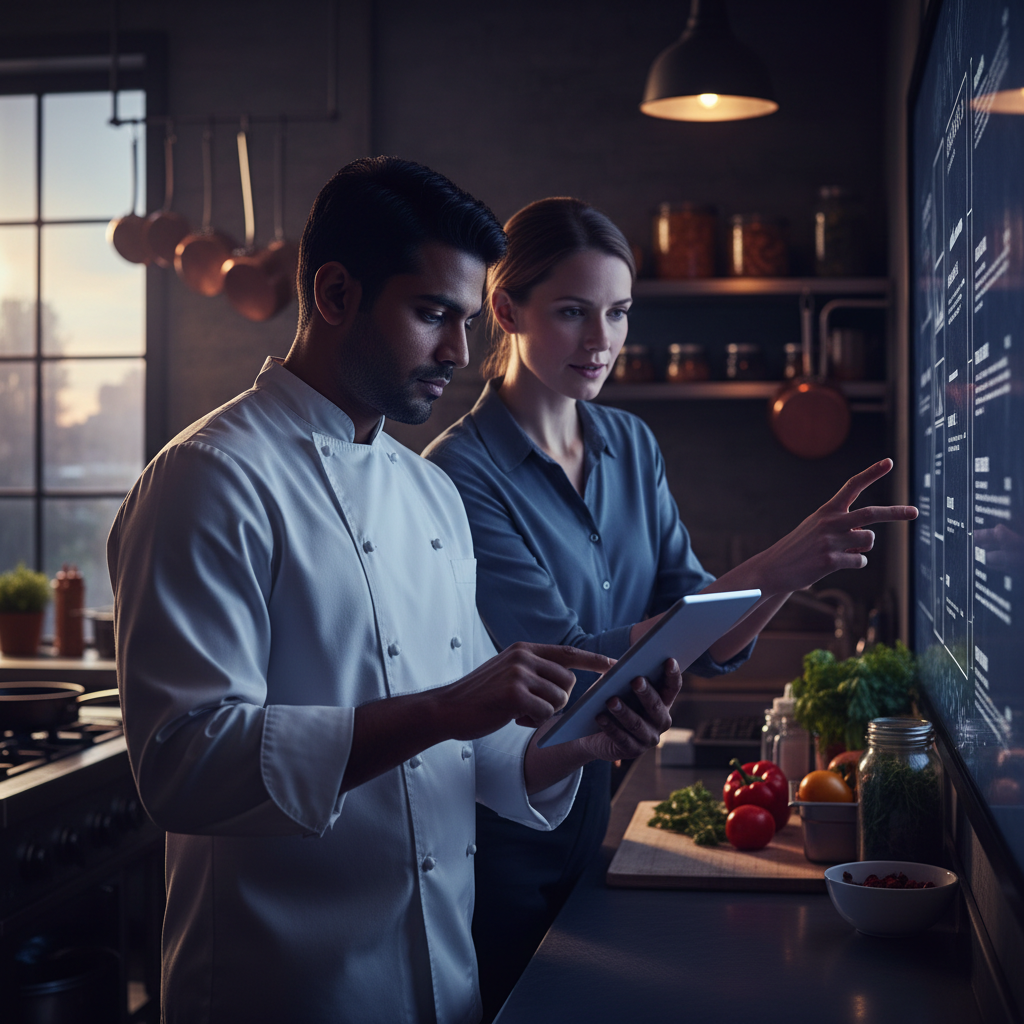
AI Menu Generator: Create a Restaurant Menu Instantly
AI menu generators represent a meaningful shift in how restaurants approach menu creation. Instead of spending hours writing dish descriptions and arranging layouts, operators can now use AI to generate menu content from minimal input — describing a dish's main ingredients and cuisine style, and having the AI produce compelling, sales-oriented menu copy in seconds.
Build your digital or QR menu in minutes
Try our Free AI Menu Builder for RestaurantsWhat AI Menu Generators Actually Do
Want a digital menu with QR code for your restaurant? Build your free digital menu — Create a QR menu in minutes — update it anytime, no printing required.
AI menu tools work across several dimensions of menu creation:
- Dish description writing: Input a dish name and key ingredients; the AI generates menu-ready descriptions with appropriate sensory language and tone.
- Menu structure suggestions: AI can suggest category organization, item sequencing, and menu architecture based on your concept and cuisine type.
- Template selection and layout: Some tools combine AI content generation with design templates, producing complete menu layouts from simple inputs.
- Translation and localization: AI can translate menu content into multiple languages for international restaurants or diverse customer bases.
Where AI Menu Tools Add the Most Value
AI menu generation is most valuable in specific situations:
New restaurant openings: Writing compelling descriptions for an entire menu from scratch is time-consuming. AI can generate a working first draft for every item in a fraction of the time, which you then refine rather than write from nothing.
Seasonal menu updates: Adding new seasonal items requires new descriptions. AI can generate initial descriptions for new dishes quickly, maintaining consistency with existing menu copy.
Multi-language menus: For restaurants serving international customers, AI translation of menu content is faster and more accessible than professional translation services, though human review is recommended for fine dining contexts.
Operators who struggle with writing: Not every talented chef or restaurateur is a skilled copywriter. AI levels the playing field, giving smaller operations access to professional-quality menu language regardless of internal writing skills.
Current AI Menu Generator Tools
ChatGPT / Claude for Dish Descriptions
General AI writing assistants can generate excellent menu descriptions with the right prompt. A prompt like "Write a compelling, evocative 2-sentence menu description for a dish called [name] that includes [ingredients], served at a [restaurant type] with a [cuisine style]" typically produces strong results that need only minor editing.
This approach requires more manual effort than purpose-built menu tools but offers maximum flexibility and control over the output style.
Canva's AI Features
Canva has integrated AI writing and design tools into its platform, including text generation that can assist with menu copy. Combined with Canva's template library, this creates an end-to-end menu creation tool that uses AI to accelerate both content and design.
Purpose-Built AI Menu Tools
Several startups have built menu-specific AI tools that combine content generation, design, and publishing in a single platform. These are purpose-optimized for restaurant menus and typically produce more industry-appropriate outputs than general AI tools.
Best Practices for AI-Generated Menu Content
Always review and edit AI output
AI-generated menu descriptions are a strong starting point, not a finished product. Review every description for accuracy (the AI may invent ingredients or cooking methods), tone (does it match your restaurant's voice?), and uniqueness (generic AI descriptions sound like generic AI descriptions — add specific details that make each item feel authentic).
Give AI specific inputs for better outputs
The quality of AI menu content depends heavily on the quality of your input. Instead of "write a description for our salmon dish," try "write a menu description for our pan-seared Faroe Island salmon with house-made dashi butter, crispy capers, and roasted broccolini — the restaurant has a contemporary Japanese-French fusion style and targets urban professionals aged 30-50."
Maintain consistent voice across the menu
AI can generate descriptions that vary significantly in tone depending on the prompts used. After generating descriptions for all items, review them as a complete document and edit for consistency. The menu should read as if written by a single voice with a clear point of view.
Don't over-optimize for AI readability at the expense of human appeal
There's a temptation to write menus with AI-friendly language that performs well in AI overviews. The priority should be writing for the human reading the menu in your restaurant. AI search visibility for menu content is primarily determined by schema markup, page titles, and structured data rather than the descriptive language itself.
AI Menus and Digital Presence
For restaurants with websites and online ordering, AI can assist with creating menu content suitable for online publication — formatted for readability on screens, structured with appropriate schema markup for Google's food menu understanding, and consistent in tone with the rest of the restaurant's digital presence.
Properly structured online menus — with schema markup identifying your menu as a restaurant menu, individual items as menu items, and prices as structured data — improve visibility in AI-powered search results and voice search queries about nearby restaurants.
The Future of AI in Restaurant Menus
AI menu tools are improving rapidly. In the near future, expect AI to assist with: personalized menu suggestions for returning customers based on past orders, dynamic menu pricing adjusted to ingredient costs and demand, real-time translation for international customers, and integration between menu creation tools and loyalty platforms that can identify which menu items drive repeat visits.
Create your menu now — free, no design skills needed
Try our Free AI Menu Builder for RestaurantsFor today's restaurant operators, AI menu generators offer a practical, accessible way to create better menus faster. The technology is mature enough to use in production — the key is treating AI output as a strong draft that requires human editing and refinement, not a finished product.
What Makes a Restaurant Menu Effective
A well-designed restaurant menu does far more than list what's available. It guides guest decisions, communicates your brand's personality, highlights your most profitable dishes, and sets expectations for the dining experience before the first bite arrives. Poor menu design, on the other hand, overwhelms guests with too many options, buries your best dishes, and trains customers to hunt for the cheapest item on the page.
Understanding a few core principles of menu design can meaningfully increase your average check and guest satisfaction — without changing a single recipe.
Menu Engineering: The Science Behind the Layout
Menu engineering is the practice of strategically positioning and presenting menu items to maximize profitability. The core framework categorizes every item into one of four quadrants based on popularity and margin:
- Stars (high popularity, high margin): These are your best items. Give them prime placement — the upper right of a two-page spread, the top of a category, or a visual callout box. Don't hide them.
- Plowhorses (high popularity, low margin): Guests love these but they don't make you much money. Consider raising the price slightly, reducing the portion, or repositioning them lower on the menu.
- Puzzles (low popularity, high margin): These are worth investing in. Better photography, more compelling descriptions, or placement near popular items can bring these dishes to life.
- Dogs (low popularity, low margin): Consider removing these. Menu bloat hurts the guest experience and ties up prep resources on items that don't earn their keep.
How to Write Menu Descriptions That Sell
The words on your menu work hard — or they don't. A flat description like "Grilled salmon with vegetables" does nothing to build appetite or justify the price point. A well-written description like "Atlantic salmon, grilled over hardwood, served with roasted seasonal vegetables and a lemon-herb butter sauce" is specific, sensory, and earns the price.
Tips for better menu copy:
- Use origin words: "house-made," "locally sourced," "slow-roasted," "wood-fired"
- Invoke senses: describe textures, temperatures, and aromas
- Be specific about preparation: "pan-seared" is more evocative than "cooked"
- Keep it concise: two to three compelling sentences is better than a long paragraph
- Avoid generic words: "delicious," "amazing," and "popular" add nothing
Digital vs. Printed Menus: Which Is Right for Your Restaurant
Printed menus offer a tactile, curated experience — particularly valuable in fine dining. But they're expensive to update, can't be changed in real time, and don't collect any data. Digital menus, whether accessed via QR code, tablet, or online, solve all of those problems. Most restaurants today use a combination: printed menus for a premium feel with QR codes for accessibility, real-time specials, and loyalty integration.
For restaurants using Loop.fans, digital menus provide a natural touchpoint for loyalty enrollment. When guests access your menu digitally, you can prompt them to join your rewards program, earning points for their visit and any content they share about their experience.
Free Menu Tools vs. Paid: What You Actually Get
Many free menu creation tools exist, including Canva, Adobe Express, and dedicated restaurant menu builders. For basic designs, free tools are genuinely useful. Where they fall short:
- Limited customization options beyond templates
- No real-time updating capability for digital menus
- No integration with your POS, ordering system, or loyalty program
- Branding restrictions (watermarks, platform logos)
- No analytics on what guests are viewing
For restaurants serious about using their menu as a business tool, a paid platform with real-time editing, analytics, and integration capabilities pays for itself quickly.
Ready to build your digital menu?
Try our Free AI Menu Builder for RestaurantsFrequently Asked Questions About Restaurant Menus
How many items should a restaurant menu have?
Research consistently shows that menus with fewer, well-described options outperform menus with many choices. The "paradox of choice" applies: too many options leads to decision fatigue and lower satisfaction. Most consultants recommend 7 items or fewer per category as a starting point.
How often should I update my menu?
Seasonal updates (quarterly) keep your menu fresh and allow you to capitalize on ingredient availability and pricing. More frequent micro-updates — removing sold-out items, adding specials — should happen in real time, which is why digital menus are so valuable.
What's the best format for a small restaurant menu?
For small restaurants, a single-page or two-page menu typically works best. It forces discipline in item selection and makes the guest experience easier. A digital version of the same menu gives you flexibility to add specials, rotate items seasonally, and update prices without reprinting.
Also on Loop.fans: Build your restaurant's online presence with our AI website builder for restaurants — includes CRM, loyalty, and online booking in one place.
Getting the most out of ai menu generator create restaurant menu instantly: advanced tips and next steps
Use data to refine continuously
Track which menu items generate the most revenue per square foot of prep space, not just which sell the most units. High-margin, low-effort items deserve prominent placement; low-margin, high-complexity items should be reviewed regularly.
Connect menu strategy to loyalty
Your best-selling items are your loyalty program's best promotional tools. Offering a free version of your most popular dish as a reward drives redemptions, visibility, and word-of-mouth far more effectively than a generic discount.
Test incrementally, not all at once
Menu changes are experiments. Change one section at a time, give it 4–6 weeks, and measure the impact on total covers, spend per head, and reorder rate before making the next change.
Optimize for operational rhythm
The best menus are designed with kitchen flow in mind. Items that share prep components, cooking methods, or timing reduce service friction and improve consistency — especially during peak hours.
Ready to get started?
Launch your free digital loyalty card — No app download required for customers. Set up in 10 minutes.