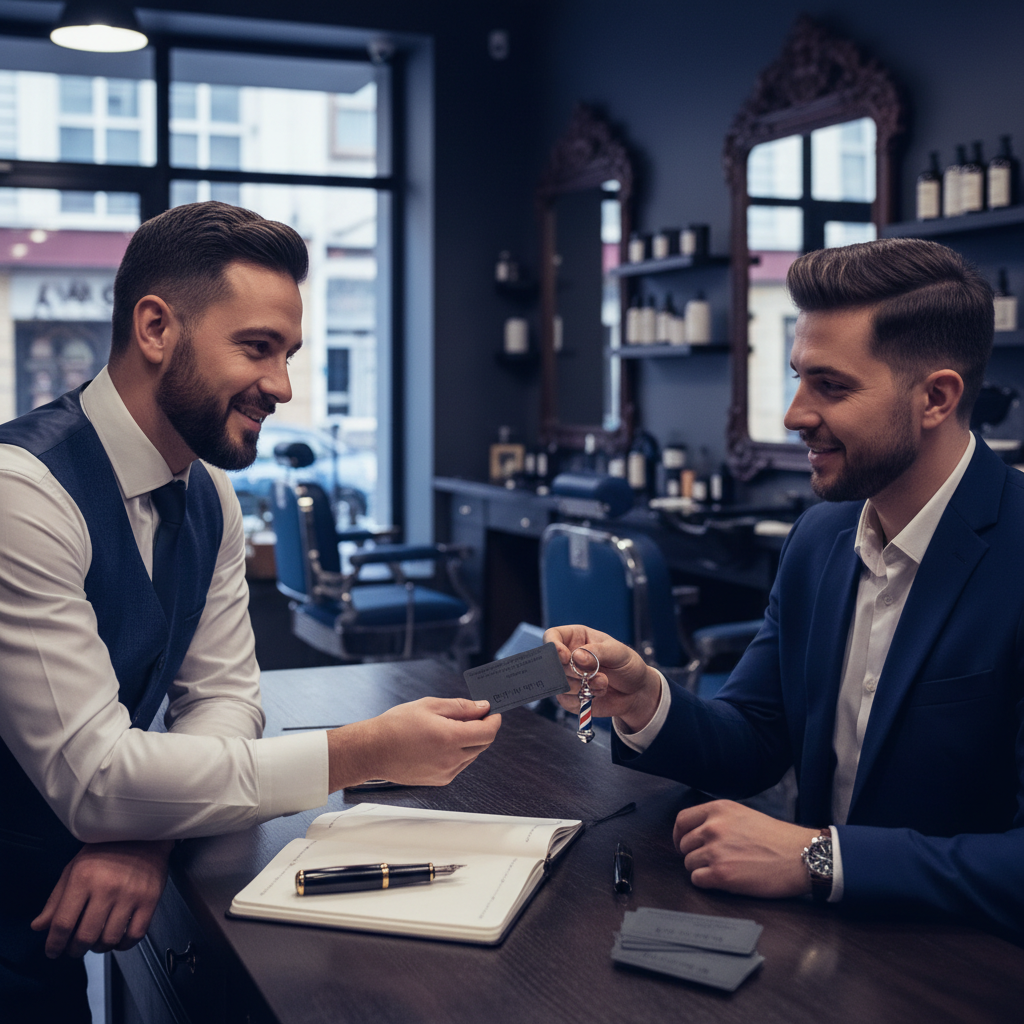
Barber Shop Loyalty Program: How to Turn Walk-Ins Into Regulars
Barber shops have one of the highest natural repeat rates of any personal care business — a good haircut brings people back every 3–6 weeks. A loyalty program turns that natural cadence into a deliberate relationship and builds a community around your shop.
The barber-client relationship and why loyalty reinforces it
Want to keep your clients booking again and again? Launch your free loyalty program — Digital punch card — no customer app download required. Free to start.
The relationship between a barber and their regular client is built on trust, consistency, and personal connection. A loyalty program does not replace that relationship — it reinforces it. When clients know they are building toward a reward, they have a reason to come back to your specific shop rather than trying somewhere closer or cheaper.
The challenge is that barber shop loyalty tends to be stylist-specific rather than shop-specific. If a barber moves on, clients often follow. A shop-level loyalty program creates a financial reason to stay with the business, not just the individual.
What to reward in a barber shop loyalty program
Visits are the foundation — a stamp or points for every haircut, beard trim, or service. Build on that with referral rewards: new clients referred by a loyal customer should earn the referring client a meaningful bonus. Retail product purchases (pomades, waxes, beard oils) are worth rewarding too, since they increase revenue per visit and connect clients to your brand.
First appointment bonuses — extra stamps for a client's first booking — remove friction for new customers and fast-track their engagement. Consider linking to the free loyalty program app guide when onboarding clients to show them how simple it is.
Punch card vs points for barber shops
Both work, but for simplicity punch cards win for most barber shops. A "get 9 cuts, the 10th is free" structure is immediately understood by every customer without any explanation. Digital punch cards eliminate the physical card problem — no lost cards, no forgetting — while keeping the familiar mechanic.
Points-based programs offer more flexibility (different point values for different services, retail vs cuts) but require more explanation and more management. For most independent barber shops, a simple digital stamp card is the right starting point. The best digital punch card apps comparison covers the leading options.
Building community around your barber shop through loyalty
The barber shops that build the strongest loyalty do more than give away free cuts. They create a community — a place clients identify with, not just visit. Loyalty programs can support this by creating shared milestones: loyalty challenges where the whole shop community works toward a collective goal, anniversary rewards for long-term clients, and recognition for top referrers.
Consider a "most referrals this month" leaderboard posted in the shop. The competitive element appeals to a lot of barber shop regulars and drives word-of-mouth without any ad spend. Events — open evenings, product launches, charity cuts — give loyal clients exclusive access and deepen their connection to the business.
This community-building approach works particularly well alongside word of mouth marketing strategies that turn your best clients into active promoters.
Promoting your loyalty program without feeling salesy
The checkout moment is natural for a loyalty program mention. After the service, when the client is happy and paying, a brief "have you signed up for our loyalty card yet?" is well-received. Avoid hard-selling the program or making clients feel obligated.
QR codes on mirrors, at the till, and on appointment cards provide passive enrollment. Include the loyalty program in booking confirmation messages. Social posts about reward milestones and free cut giveaways create ongoing awareness without requiring any direct sales conversation.
Measuring success and improving over time
Track visit frequency for loyalty members versus non-members. Track referral count monthly. Track how many new clients sign up for the loyalty program — if it's below 40% of new clients, your signup process needs work.
Review redemption rates quarterly. If clients are earning rewards but not redeeming them, the threshold may be too high, the reward may not be appealing enough, or clients have simply forgotten about the program. All three are fixable with simple adjustments.
Frequently asked questions
Do barber shops need loyalty programs?
Yes — especially independent shops competing with chains. A loyalty program gives clients a financial reason to stay with you rather than try a cheaper option nearby.
What is the best loyalty app for a barber shop?
A digital punch card app that requires no customer download. Loop.fans, Stamp Me, and Loopy Loyalty are all worth comparing.
How do I get more repeat clients at my barber shop?
Loyalty program plus a booking reminder system. Clients who book their next appointment before leaving return 2–3x more often than walk-ins.
Should barber loyalty rewards be free cuts or discounts?
Free cuts or free services are better than discounts. Discounts train clients to wait for a deal; free services feel like a gift.
Can I run a barber shop loyalty program without an app?
Yes. The best options use QR codes or text-based check-in so clients do not need to download anything.
Handling the individual barber loyalty problem
One of the most important strategic decisions for a barber shop with multiple chairs is whether loyalty is tied to the shop or to the individual barber. When clients become loyal to a specific barber rather than the shop, staff turnover becomes an existential risk: a popular barber who leaves takes a significant portion of the client base with them.
A shop-level loyalty program creates a financial reason to stay with the business regardless of which barber a client sees. This does not mean ignoring the individual relationship — that personal connection is genuinely valuable and should be maintained. It means adding a layer of loyalty to the shop itself. Clients who have accumulated stamps are less likely to follow a departing barber because they would lose their progress. Over time, this shifts some of the emotional investment from the individual to the business.
The most effective implementation rewards any visit to the shop, not specifically with one barber. If a client's usual barber is unavailable, the loyalty program gives them a concrete reason to try another barber in the shop rather than going elsewhere. This also helps newer barbers build their client base — clients trying them due to loyalty considerations often become regulars.
Building community around your barber shop
The barber shops that build the deepest loyalty do more than give away free cuts. They create a genuine community — a place clients feel connected to and identified with. This community dimension is one of the things that distinguishes barbershops from most other small businesses: there is already a natural social environment built around the waiting area and the chair.
Loyalty programs can reinforce this community dimension in several ways. Monthly leaderboards for top referrers, posted visibly in the shop, appeal to the competitive nature of many regulars and drive word-of-mouth. Loyalty challenges — "visit 5 times in 8 weeks and unlock a bonus reward" — create shared goals that clients can discuss with each other in the waiting area. Annual loyalty appreciation events for your top-tier clients create memorable experiences that money cannot buy.
The word of mouth marketing framework covers how community-driven businesses generate referrals organically. A barber shop with strong community loyalty generates referrals at a rate that makes paid advertising largely unnecessary.
Promoting your barber shop loyalty program
The checkout moment is the natural enrollment point. After the haircut, while processing payment, a brief mention — "We have a loyalty card if you are not already on it — you earn a free cut after eight visits" — converts without any awkwardness. QR codes at the mirror, on the business card, and on your social media bios provide passive enrollment for clients who prefer to sign up on their own terms.
Social media posts celebrating client milestones build awareness. A post featuring a photo of a client receiving their free cut reward (with their permission) tells the loyalty program story better than any advertisement: it shows that the program is real, that people use it, and that your shop values its regulars.
Measuring success
Track visit frequency for loyalty members versus non-members. Track referral count monthly. Track what percentage of new clients join the program — if it is below 40%, your enrollment process needs refinement. Review redemption rates quarterly: low redemption usually means the threshold is too high or clients are not being reminded of their progress.
A well-run barber shop loyalty program typically increases average visit frequency by 15–25% among enrolled clients within the first six months. That improvement — even just one extra visit per year per enrolled client — has a material impact on annual revenue. The loyalty program ROI guide walks through the calculation in detail.
Measuring Your Barber Shop Loyalty Program Success
Three metrics tell you if your loyalty program is working for a barber shop:
- Program enrollment rate: What percentage of your regular clients (those who visit at least once a month) are enrolled in the loyalty program? Target 50–60% within 90 days of active promotion. If you're below 30%, the issue is checkout promotion — add verbal enrollment as a consistent staff practice.
- Return visit rate for enrolled vs. non-enrolled clients: Are enrolled clients coming back at the same or higher frequency as before they enrolled? Compare enrolled and non-enrolled client visit frequency after 60 days. Most barber shops see a 10–15% improvement in visit frequency among enrolled clients once they've accumulated enough stamps to feel invested in the reward.
- Shop retention rate after barber turnover: The hardest metric to track but the most important for long-term shop stability. When a barber leaves, what percentage of their regular clients stay at the shop versus follow the barber? A strong loyalty program and shop community culture should retain 30–40% of those clients even after a preferred barber departs.
For more on building customer loyalty systems that survive individual staff turnover, see client retention strategies and how to increase repeat customers. Tools like Loop.fans make it easy to track shop-level loyalty separately from individual barber relationships.
Advanced tips and next steps for your barber shop loyalty program
Barber shops operate on a natural recurring service cycle — most clients need a cut every 2–4 weeks. A loyalty program that works with this rhythm can dramatically increase visit frequency and client lifetime value.
1. Time your loyalty promotions to the typical cut cycle. If most of your clients visit every 3 weeks, a promotion that expires in 4 weeks creates the right amount of urgency without feeling manipulative. "Double points this week only" works because it falls within the window when most clients would consider coming in anyway. Promotions that align with natural behavior always outperform ones that ask clients to change their habits.
2. Create a monthly membership tier for your most frequent clients. Clients who visit twice a month or more are your highest-value segment. A monthly membership — unlimited cuts plus one complimentary hot towel treatment — at a flat rate gives these clients tremendous perceived value while locking in predictable revenue for you. Membership clients also tend to pre-book more consistently, making your schedule easier to manage.
3. Use your loyalty platform to upsell beard and scalp treatments. The average barber shop revenue per visit is heavily weighted toward the haircut. Loyalty points and targeted messaging can shift this. A message like "Your next visit earns you double points when you add a beard line-up — try it for $10" introduces clients to services they might not have considered and increases both revenue per visit and service attachment rates over time.
4. Build a referral program anchored in the barber-client relationship. The most trusted referral a new client can receive is from their barber. Encourage your clients to refer friends by making it easy and rewarding: a digital referral card, a clear benefit for both parties, and a follow-up thank-you when a referral comes in. Some barbers also offer the referring client a brief recognition in front of the new client — a small gesture that deepens loyalty significantly.
The best barber shops are institutions in their communities. A loyalty program that reflects the culture of the shop — personal, direct, built on relationships — can be a natural extension of what already makes those shops special.
Ready to get started?
Start your free loyalty program on Loop.fans — Takes 10 minutes to set up. Free forever.