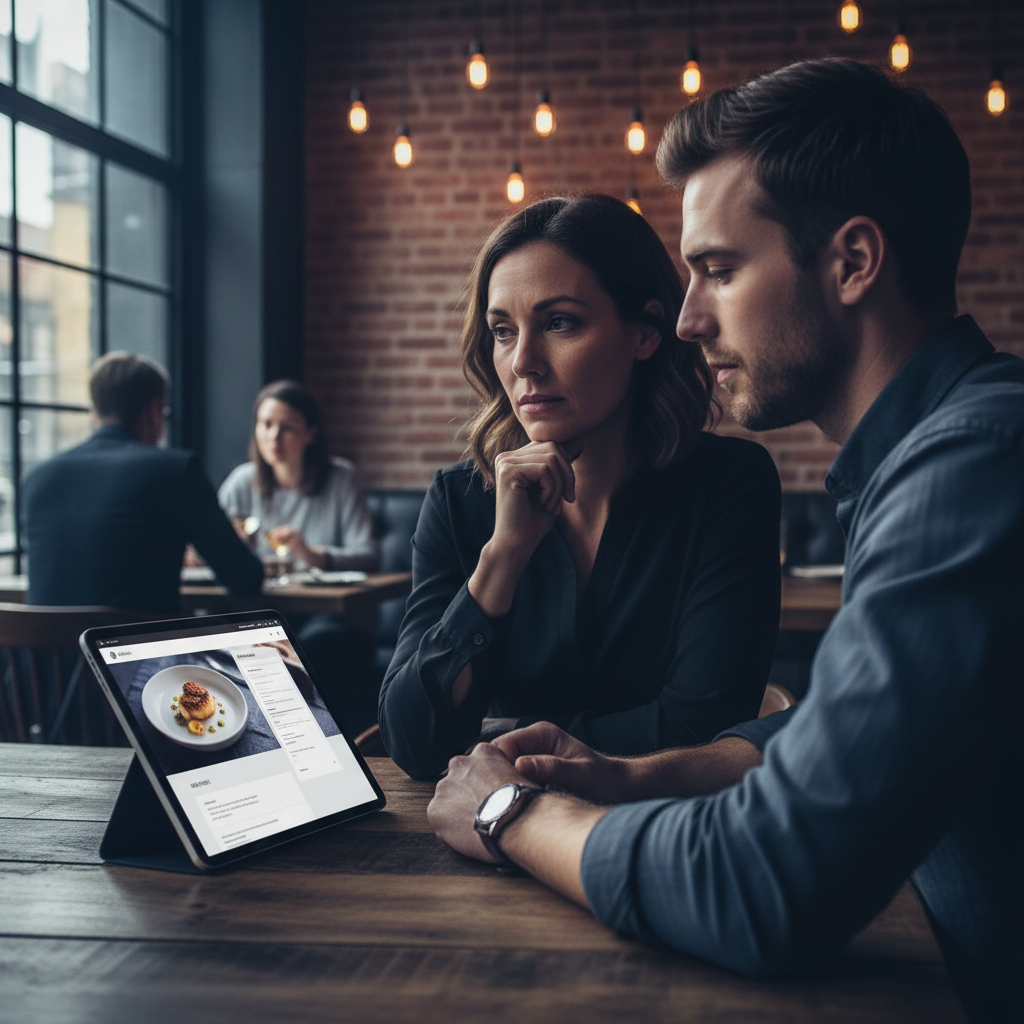
Best Website Design Ideas for Restaurants
Restaurant website design should balance atmosphere with action. A site needs to feel like the brand while still making it effortless for a visitor to check the menu, book a table, or order online. The strongest restaurant website ideas are grounded in that balance.
Build your restaurant website and manage customers in one place
See the Loop.fans Website & CRMDesign Ideas That Work
Want to bring more guests back through your door? Launch your free restaurant loyalty program — No customer app download required. Set up in 10 minutes.
- Large hero photography: instantly communicates quality and mood.
- Sticky reservation CTA: keeps booking visible as users scroll.
- Simple menu navigation: helps guests scan quickly.
- Location and hours above the fold: removes basic friction.
- Gallery or social proof blocks: reinforces the experience visually.
Layout Principles
Use strong hierarchy, clear spacing, and mobile-first layouts. Avoid cluttered homepages that bury the most important actions. Restaurant sites work best when they feel focused and intentional.
Why Your Restaurant Website Is Your Most Important Marketing Asset
Your restaurant's website is often the first thing a potential guest sees before they ever step through your door. A poorly designed or outdated site can turn away customers who would otherwise have booked a table or placed an order. More importantly, a well-designed site doesn't just inform — it converts. It guides visitors from interest to reservation, from browsing to ordering, from first-time guest to loyal regular.
Unlike social media platforms where your content competes with everything else in a feed, your website is entirely yours. The layout, the story you tell, the call-to-action — all of it is in your control. That's a significant advantage that many restaurant operators underutilize.
The Essential Pages Every Restaurant Website Needs
- Homepage: This is your first impression. Include your name, a compelling image or video, your location and hours, and a clear call-to-action — usually a reservation button or online ordering link. Don't make guests search for the basics.
- Menu page: Your menu is the most-visited page on most restaurant websites. Make it easy to read on mobile, keep it updated, and consider linking to a digital version that you can update in real time. Including photos dramatically increases engagement.
- Reservations page: Friction kills reservations. Integrate an online reservation system directly into your site — whether that's OpenTable, Resy, or a custom booking form. Requiring guests to call during limited hours to reserve a table is a conversion killer.
- About page: People eat at restaurants they feel connected to. Share your story — why you opened, who you are, what drives your kitchen. Authenticity builds trust and loyalty.
- Contact and location: Make it trivially easy to find your address, parking information, and phone number. Include a Google Maps embed. Guests searching for you on mobile shouldn't have to hunt for your location.
Restaurant Website Design Principles That Drive Conversions
Design isn't just about aesthetics — it's about guiding behavior. The most effective restaurant websites make one thing obvious: what they want you to do next. Here are the principles that separate high-converting restaurant sites from ones that look good but don't produce results:
- Mobile-first design: Over 70% of restaurant website traffic comes from mobile devices. If your site isn't fast and easy to navigate on a phone, you're losing customers.
- Clear CTAs above the fold: "Reserve a Table," "Order Online," or "View Our Menu" — whatever your primary goal is, the button should be visible without scrolling.
- Fast loading speed: Slow sites lose visitors. Compress your images, minimize plugins, and choose a hosting provider with strong uptime guarantees. Every second of load time costs you conversions.
- High-quality food photography: Nothing sells a restaurant like great food photography. You don't need to hire a professional — a smartphone with good lighting and a clean background can produce compelling images.
- Social proof: Embed your Google or Yelp reviews, display press mentions, and showcase user-generated content from guests. Social proof reduces the hesitation of first-time visitors.
Integrating Your Website with Loop.fans for Loyalty Growth
Your website is the ideal place to promote your loyalty program. A dedicated section on your homepage or a standalone loyalty page can explain how your Loop.fans program works, what guests earn, and how to sign up. Because guests are already on your site — already interested — this is a high-intent audience for loyalty enrollment.
You can embed a sign-up widget directly into your site, link to your Loop.fans landing page, or add loyalty messaging to your reservation confirmation flow. The more touchpoints you create for loyalty enrollment, the faster your program grows.
SEO Basics for Restaurant Websites
A beautiful website that nobody finds is a missed opportunity. Basic search engine optimization ensures that guests searching for restaurants like yours in your area can actually discover you. Key priorities:
- Include your city and neighborhood in your page titles, headers, and meta descriptions
- Create a Google Business Profile and keep it updated
- Make sure your name, address, and phone number are consistent across all directories
- Add schema markup so search engines understand your hours, location, and menu
- Collect and respond to Google reviews — review volume and recency are ranking signals
Ready to build your restaurant website?
See the Loop.fans Website & CRMFrequently Asked Questions About Restaurant Websites
How much does a restaurant website cost?
Costs range from nearly free (using platforms like Squarespace or Wix with a basic plan) to several thousand dollars for a custom-built site. For most independent restauran
Get a website built for restaurants — with CRM, loyalty and bookings included
See the Loop.fans Website & CRMShould I build my restaurant website myself or hire someone?
Modern website builders make it feasible for non-technical restaurant owners to create a professional site. For restaurants with complex needs — custom ordering systems, loyalty integration, or multi-location setups — professional development is worth the investment.
How often should I update my restaurant website?
At minimum, update your menu, hours, and contact information whenever they change. Seasonal content updates, new photography, and fresh blog posts or news items help with both guest experience and SEO.
Building a Stronger Restaurant Business Through Better Systems
Running a restaurant is one of the most operationally demanding businesses in any industry. Margins are thin, staff turnover is high, and guest expectations continue to rise. The restaurants that thrive long-term tend to share a common trait: they invest in systems that make the guest experience consistently excellent while reducing the operational burden on their teams.
Whether that means a better menu management process, a smarter reservation system, a loyalty program that turns one-time visitors into regulars, or a digital presence that converts browsers into bookings — every improvement to your systems compounds over time. Small wins stack up into meaningful competitive advantages.
The Role of Digital Tools in Modern Restaurant Operations
The restaurant technology landscape has expanded dramatically. Tools that were once only available to large chains — digital menu management, loyalty programs, online ordering, automated marketing — are now accessible and affordable for independent operators. The challenge is knowing which tools actually move the needle and which ones add complexity without delivering value.
The most impactful digital investments for most restaurants fall into a few categories:
- Guest-facing tools: Your website, online ordering, reservation system, and digital menu are what guests interact with before and during their visit. These directly affect conversion and experience.
- Marketing and retention tools: Email marketing, loyalty programs, and social media presence are how you stay connected with guests between visits and bring them back.
- Operational tools: POS systems, inventory management, and scheduling software reduce friction and error in day-to-day operations.
- Analytics: Understanding what's working — which menu items, which promotions, which channels — is essential for making good decisions with limited resources.
How Loop.fans Fits Into the Restaurant Ecosystem
Loop.fans is built for restaurants that want to go beyond transactional loyalty. Traditional stamp cards and basic points programs reward spend only. Loop.fans enables you to reward the full range of valuable guest behaviors: visits, referrals, user-generated content, reviews, and social sharing.
The platform is designed to be lightweight for guests (no app download required) and powerful for operators. You can set up your program, define what earns points, and configure rewards in minutes. The data you collect — who your most engaged guests are, what brings them back, what they share — becomes a valuable asset for making smarter marketing decisions.
What Guests Actually Want from Restaurant Technology
Guest research consistently shows that technology is welcome when it makes their experience easier or better — and unwelcome when it adds friction or feels impersonal. The highest-rated digital touchpoints in restaurants are:
- Online reservations and waitlist tools that reduce uncertainty
- Digital menus that are easy to navigate and include photos
- Mobile payment options that speed up the end-of-meal experience
- Loyalty programs that recognize them and offer rewards they actually want
The lowest-rated are often the reverse: clunky interfaces, confusing loyalty programs with unreachable rewards, and technology that replaces human interaction without delivering a better experience in its place.
Practical Next Steps for Restaurant Operators
If you're looking to strengthen your restaurant's digital foundation, a practical starting point is to audit your current guest touchpoints: How easy is it for someone to find you online? How simple is the reservation process? Does your loyalty program actually drive repeat visits? Is your menu easy to read on a phone?
Identify the biggest gap and address it first. Trying to overhaul everything simultaneously rarely works — you end up with half-implemented systems and a team that's overwhelmed. One well-executed improvement, measured and refined, creates momentum for the next.
Frequently Asked Questions
What's the most impactful technology investment for a small restaurant?
For most small restaurants, the combination of a clean, mobile-optimized website with integrated online ordering or reservations delivers the fastest ROI. These tools directly increase revenue and reduce the operational friction of managing bookings and orders manually.
How do I choose the right loyalty program for my restaurant?
Start by identifying what behavior you most want to encourage — repeat visits, referrals, social sharing — and find a platform that makes those things easy to reward. Ease of enrollment for guests and ease of management for your team should both be high on your criteria list.
Is it worth investing in digital tools for a restaurant that already has strong word-of-mouth?
Strong word-of-mouth is an asset — and digital tools amplify it. A loyalty program gives your advocates a reason to refer friends, a digital menu gives them something easy to share, and a good website converts the referrals they send into actual bookings.
Getting the most out of best website design ideas for restaurants: advanced tips and next steps
Use data to refine continuously
Track which menu items generate the most revenue per square foot of prep space, not just which sell the most units. High-margin, low-effort items deserve prominent placement; low-margin, high-complexity items should be reviewed regularly.
Connect menu strategy to loyalty
Your best-selling items are your loyalty program's best promotional tools. Offering a free version of your most popular dish as a reward drives redemptions, visibility, and word-of-mouth far more effectively than a generic discount.
Test incrementally, not all at once
Menu changes are experiments. Change one section at a time, give it 4–6 weeks, and measure the impact on total covers, spend per head, and reorder rate before making the next change.
Optimize for operational rhythm
The best menus are designed with kitchen flow in mind. Items that share prep components, cooking methods, or timing reduce service friction and improve consistency — especially during peak hours.
Ready to get started?
Start free on Loop.fans — No contract. Works with any POS. Free forever.