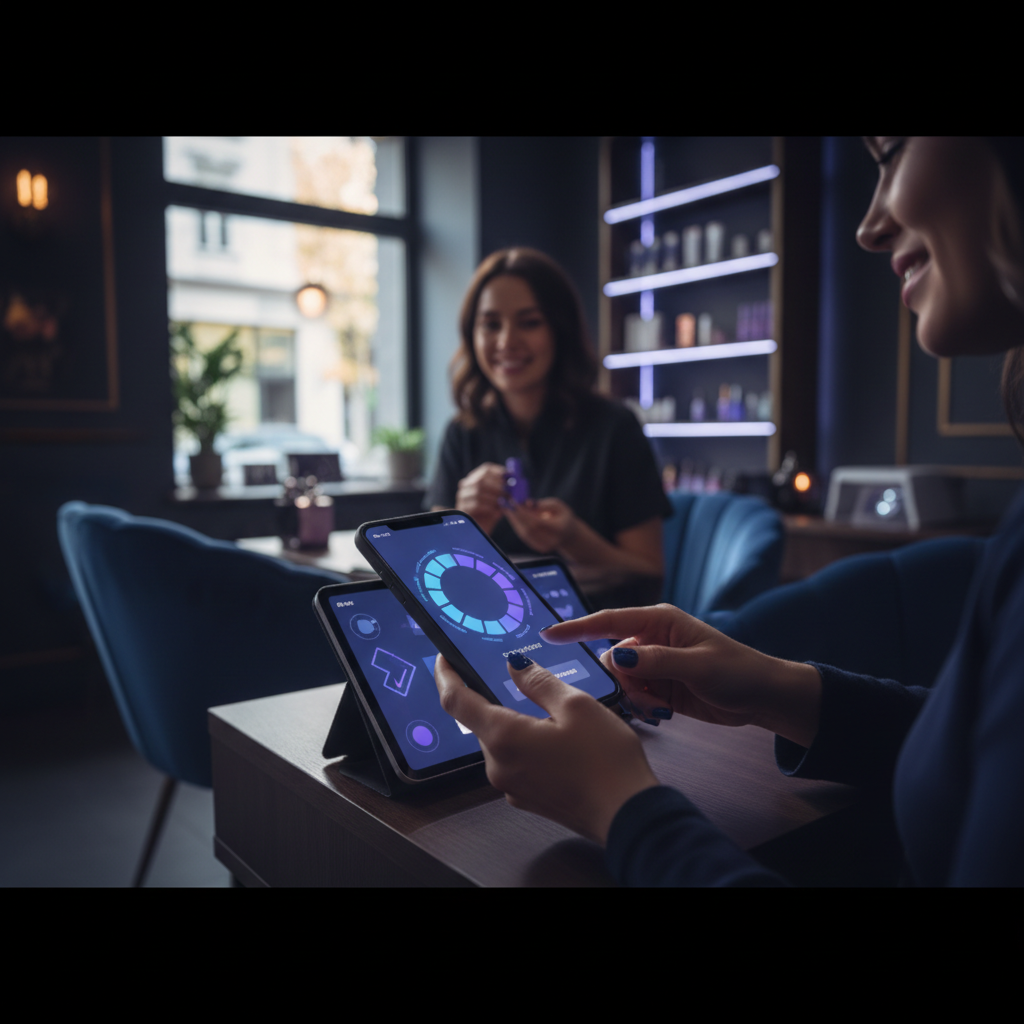
Digital Loyalty Card for Nail Salons: How to Replace Paper Punch Cards
Paper punch cards were a good idea in their time. But paper has real limitations: cards get lost, forgotten, or sit at the bottom of a purse for months. Digital loyalty cards solve all those problems while adding capabilities paper can't match — automatic reminders, rebooking prompts, referral tracking, and data analytics. Here's why the switch is worth making and how to do it.
Why Digital Beats Paper for Nail Salons
Want to replace your paper punch cards with a digital version? Get your free digital punch card — Customers earn stamps on their phone. No app download required.
- No lost cards — a client's phone is almost always with her; her punch card is not
- Automatic reminders — "You're 1 visit away from your free gel set" arrives as a notification, not when she happens to find the card
- Rebooking prompts — digital systems trigger rebooking messages 3 weeks after the last visit automatically
- No fraud — you can't counterfeit a digital stamp the way you can with a paper hole punch
- Data and analytics — see who your most loyal clients are, how often they visit, and when they last came in
- Zero inventory — no printing costs, no running out, no physical storage needed
Clients don't resist digital loyalty — they already use their phones for everything. The bigger barrier is usually the salon owner's hesitation, not the clients'.
No-App-Download Options: Critical for Adoption
The biggest adoption killer is requiring an app download. Most clients won't download a new app for a single business. The best digital loyalty systems for nail salons work without one: QR code enrollment (client scans → lands on mobile web page → enrolls with phone number or email → done), text-based systems (client texts a keyword → gets a link to their digital card), or web-based wallet (card lives in mobile browser, optionally saved to Apple or Google Wallet).
Tools like Loop.fans use this no-app-download approach. Enrollment takes under 30 seconds and works on any smartphone. For a nail salon loyalty program, lower friction equals higher enrollment.
Reward Thresholds for Nail Services
- Basic mani/pedi client (every 2–3 weeks) → reward after 8–10 visits: free service upgrade or add-on
- Gel set client (every 3–4 weeks) → reward after 6–8 visits: free fill or nail art add-on
- Acrylic/full set client (every 4–6 weeks) → reward after 5–7 visits: free removal, shape change, or nail art
The reward matters. Cash discounts are less motivating than service upgrades at nail salons because clients come for the experience. A free nail art design is more exciting than $10 off.
Reminders and Rebooking Prompts
Two features of digital loyalty that paper can't replicate: an automated visit reminder 3 weeks after the last visit ("Your nails are probably due for a refresh! You're 2 visits from your free gel set — book now"), and a milestone alert ("You just earned your free nail art reward!") sent immediately after a qualifying visit. Clients who receive a milestone alert rebook faster than those who don't. The rebooking reminder automation alone typically produces a 20–30% increase in rebooking rates.
How to Promote to Existing Clients
Transition works best by enrolling existing clients one by one at checkout. Script: "We're upgrading to a digital loyalty card — it's much easier because you can't lose it. Can I enroll you? Just scan this code with your phone." Post the QR code at your nail station, front desk, and Instagram bio. Add it to booking confirmation texts. Within 30–60 days of active promotion, most regular clients will be enrolled.
Top Tools for Digital Nail Salon Loyalty
- Loop.fans — no-app-download, QR code enrollment, built for beauty and wellness, free to start
- Vagaro Loyalty — built into Vagaro booking software; good if already on Vagaro
- GlossGenius — booking plus loyalty in one for nail and beauty professionals
- Square Loyalty — works if already using Square for payments; charges per enrolled customer per month
For a standalone nail salon wanting the lowest-friction option, Loop.fans is purpose-built for this: a best digital punch card experience that requires no client app download.
Measuring Success
After 90 days check: enrollment rate (what % of clients who visited are enrolled?), redemption rate (what % of earned rewards get redeemed — low redemption means the reward isn't compelling or reminders aren't happening), and rebooking rate change (are enrolled clients rebooking faster than non-enrolled?). A well-run program typically shows a 15–25% increase in visit frequency among enrolled clients within 6 months.
A Digital Loyalty Card That Captures More Than Visits
A digital loyalty card for a nail salon should do more than replace a paper punch card. In the nail salon context, where the service is inherently visual, social, and relationship-driven, a well-designed digital card can become a hub for the participation behaviors that drive real business growth. The key is ensuring your digital tool facilitates — rather than ignores — the photo sharing, referrals, and community dynamics that make nail salon clients uniquely valuable advocates.
Most digital loyalty card platforms are built around transactional tracking: visits, spend, and reward redemption. For nail salons, this captures only a fraction of the value customers create. A client who posts a photo of their gel nails to Instagram stories, tags the salon, and brings two friends to their next appointment generates far more business value than their individual visit count suggests. User-generated content data shows that visual social sharing is among the most powerful drivers of new customer acquisition for appearance-based services.
Designing your nail salon's digital loyalty program with participation economy principles means building pathways for these high-value behaviors. Referral tracking, social sharing prompts with branded templates, technician preference saves, and community galleries all transform a simple visit counter into a client engagement platform. The economics of participation versus acquisition make a strong case: activating your existing clients as participants is consistently more cost-effective than traditional advertising, especially for local service businesses where word-of-mouth has always been the primary growth driver.
Frequently Asked Questions
Do clients need to download an app for a digital loyalty card?
Not with the best tools. Loop.fans and similar platforms enroll via QR code scan with no app download — the loyalty card lives in the mobile browser or can be saved to Apple/Google Wallet.
What should nail salons reward with loyalty programs?
Service upgrades (free nail art, top coat, gel upgrade) work better than cash discounts. A free add-on feels like a gift; a discount feels like a coupon.
How do I transition from paper to digital loyalty?
Enroll existing clients one by one at checkout with a 30-second QR code scan. Start fresh rather than transferring old stamps — offer a bonus stamp to make the transition feel rewarding.
How many visits should earn a reward?
6–10 visits is the sweet spot for nail salons. Too few devalues the reward; too many feels impossible and clients disengage.
Is digital loyalty worth it for a small nail salon?
Yes — even with 50–100 regular clients, the automated rebooking reminder alone pays for the tool. The client data you gain is a valuable bonus.
Making It Work: Implementation Priorities
Understanding the tactics is only half the equation. Knowing which to implement first — and in what order — determines whether your investment in digital loyalty card nail salon delivers results quickly or stalls in the planning phase.
A proven implementation sequence for most small businesses:
- Foundation first: Set up your Google Business Profile, enable online booking, and establish a basic email list. These are free or near-free and form the foundation everything else builds on.
- Retention before acquisition: Before spending on ads or new client campaigns, optimize your existing client retention. A loyalty program that brings back 20% more existing clients is worth more than an ad campaign attracting 20% more new clients, because existing clients cost nothing to acquire and spend more.
- Automate follow-up: Set up automated reminders, rebooking prompts, and loyalty milestone notifications. Once configured, these systems run without ongoing effort and consistently produce the highest per-effort ROI of any marketing activity.
- Add referral mechanics: Once your retention system is running, add a formal referral program. Your best clients become your best marketers — but only if you give them a structure and an incentive.
- Layer in paid acquisition: Only after your retention and referral systems are in place should you invest in paid ads. Why? Because every dollar in paid acquisition is wasted if the clients it brings in churn in 60 days.
The Role of Data in Long-Term Growth
The businesses that grow sustainably are the ones that make decisions based on data rather than intuition. You don't need a data science team — you need a handful of consistent metrics tracked monthly.
The four numbers that matter most for any service business:
- New client count: how many first-time clients did you see this month? This is your acquisition metric.
- Repeat client rate: what percentage of last month's clients came back this month? This is your retention metric.
- Average transaction value: how much does the average client spend per visit? This is your monetization metric.
- Loyalty program enrollment rate: what percentage of clients are enrolled in your loyalty program? This is your engagement metric.
Track these monthly for 6 months and you'll see patterns that tell you exactly where to focus. If new client count is growing but repeat rate is dropping, you have a retention problem. If repeat rate is strong but average transaction value is stagnant, you have an upsell opportunity. The data tells the story; you just have to read it.
For the loyalty infrastructure that generates this data automatically — enrollment rates, visit frequency, reward redemption, referral tracking — Loop.fans provides the analytics dashboard that makes this monthly review a 10-minute exercise rather than a manual spreadsheet effort. The customer loyalty program software that works best for small businesses is the one that gives you actionable insights without requiring a dedicated analyst to interpret them.
Building Word-of-Mouth Into Your System
Word of mouth is the highest-trust, lowest-cost marketing channel available to any small business. The problem is that most businesses treat it as something that happens to them rather than something they actively build. There's a significant difference between "hoping clients tell their friends" and "having a system that consistently generates referrals."
The core components of a systematic word-of-mouth program:
- Deliver a remarkable experience at every touchpoint: Word of mouth starts with the experience, not the marketing. A client who has an exceptional experience doesn't need to be incentivized to talk about it — they want to tell people. A client who has a mediocre experience won't refer regardless of what incentives you offer.
- Make it easy to refer: Most clients who want to refer don't because they're not sure how to do it. A simple referral link ("Send this to a friend and you'll both get [reward]") removes the friction between intention and action.
- Ask directly at the right moment: The best time to ask for a referral is immediately after a positive experience — right after a great session, immediately after a compliment, or right after a client shares that they got a great result. Asking in that moment feels natural; asking in a generic monthly email does not.
- Track and thank referrers: When a referral converts, notify the referring client immediately: "Your friend just joined — your free [reward] is ready!" This closes the loop, creates a positive emotional moment, and reinforces the referral behavior for the future.
A word of mouth marketing strategy for service businesses is most powerful when it's integrated with your loyalty program. Clients who are already loyal and feel recognized are more likely to refer than clients who feel like just another transaction. Tools like Loop.fans combine loyalty tracking and referral management in one system, so you can see which of your most loyal clients are also your best referrers — and reward them accordingly.
Customer Retention: The Compounding Advantage
Customer retention is one of the few areas in business where the returns genuinely compound over time. A client retained for 3 years is worth far more than three clients retained for 1 year each — not just because of the cumulative revenue, but because of the referrals, the increased spend on premium services, the lower support burden, and the social proof they provide.
The math: if you retain 80% of your clients annually (losing 20% per year), your client base from 5 years ago represents 33% of your current base. If you improve retention to 90% (losing only 10% per year), that same cohort represents 59% of your current base — nearly double the long-term value from a 10-point retention improvement.
This is why the most successful service businesses obsess over retention metrics rather than acquisition metrics. Acquisition brings clients in the front door; retention prevents them from walking out the back. The businesses that win long-term are the ones who close the back door first. For comprehensive frameworks on measuring and improving retention, see client retention strategies and how to increase repeat customers — both provide specific, actionable approaches grounded in what works for service businesses specifically.
Advanced tips and next steps for your nail salon digital loyalty card
A digital loyalty card is a powerful tool, but the difference between average and exceptional results comes down to how actively you manage and promote the program.
1. Train every staff member to mention the loyalty card at checkout. The single biggest driver of loyalty card adoption is a verbal mention at the point of payment. "Did you know we have a digital loyalty card? You can earn points toward a free gel manicure — want me to set you up right now?" converts far better than a passive flyer on the counter. Make this part of every checkout script for every client at every visit.
2. Use milestone bonuses to accelerate redemption cadence. A client who redeems a reward visits again sooner than one who is still accumulating. Create milestone bonuses — extra points at 50 points, a surprise reward at 100 points — that give clients something to celebrate before they reach the main redemption threshold. Each milestone is a reason to return and a moment of positive reinforcement that strengthens the habit.
3. Segment your loyalty communications by service preference. A client who exclusively books gel manicures should receive promotions and tips relevant to gel maintenance, trending gel colors, and gel-specific add-ons. A client who primarily books pedicures should hear about seasonal pedicure packages, foot care between visits, and pedicure promotions. Segmented communications feel personal and generate meaningfully higher engagement than one-size-fits-all messages.
4. Promote your loyalty card in your Google Business Profile and Instagram bio. Many salons forget that their loyalty program is a marketing tool for new clients, not just a retention tool for existing ones. "Join our loyalty program and earn a free manicure after 6 visits" in your Google Business Profile description can influence a prospective client's decision to book with you over a competitor. Add a loyalty sign-up link to your link-in-bio to capture new clients at the moment of discovery.
Digital loyalty cards succeed when they are visible, easy to use, and consistently promoted. The salons that make loyalty card mention part of their daily culture see adoption rates three to four times higher than those that let clients discover the program on their own.
Ready to get started?
Create your free digital punch card — Free forever. Set up in 10 minutes.