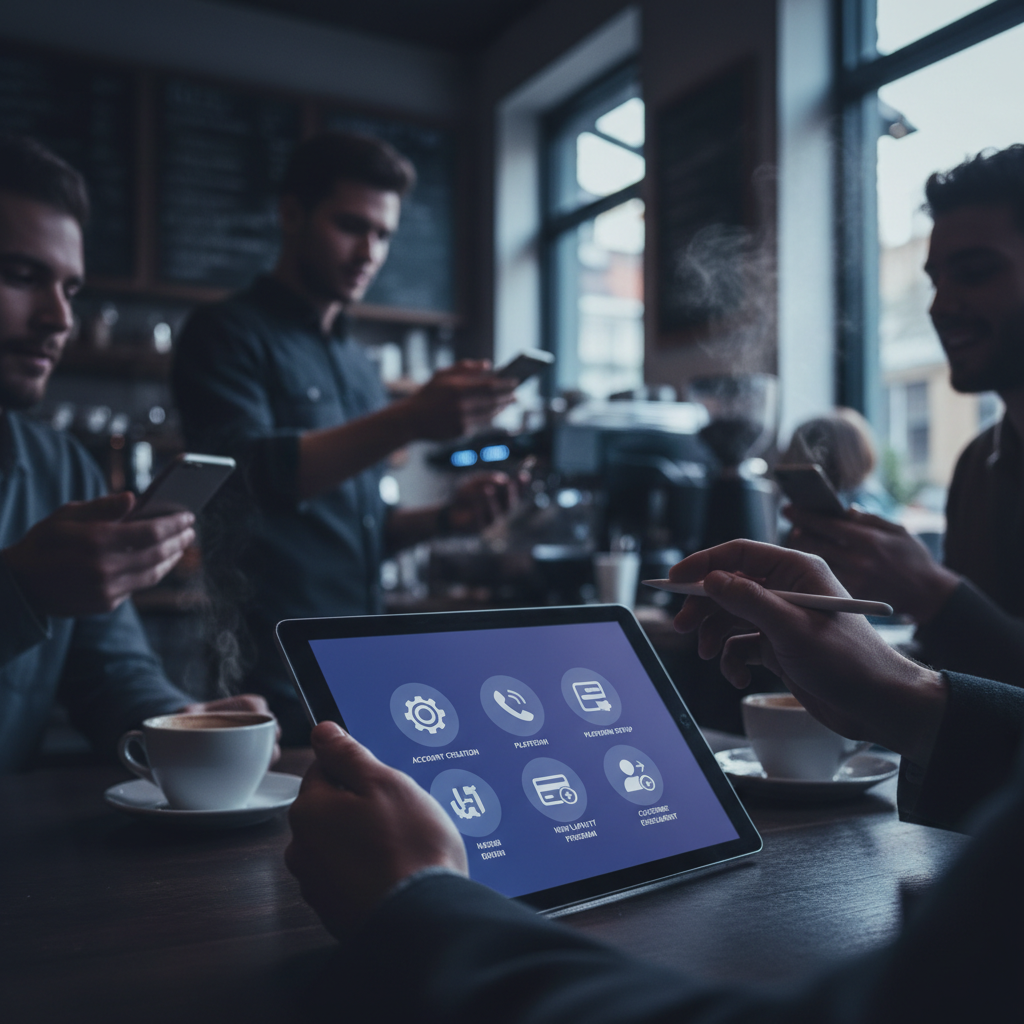
How to Set Up a Digital Punch Card for a Café (Step-by-Step)
The paper punch card is probably the most universally recognised loyalty mechanic in the world. Buy 9 coffees, get the 10th free. Every café has tried it. The problem is not the idea — the idea is great. The problem is the execution: cards get lost, customers forget them, you have no idea which customers are close to a free coffee, and there is no way to reach anyone between visits. A digital punch card solves all of that, costs nothing to start, and takes under 10 minutes to set up. Here is how to do it.
Set up your café's free digital punch card in under 10 minutes
Try Loop.fans Loyalty — FreeWhy Cafés Specifically Benefit from Digital Punch Cards
Cafés have a unique set of characteristics that make them ideal candidates for digital punch cards — more so than almost any other business type:
- High visit frequency: The average specialty coffee drinker visits a café 2–3 times per week. At that rate, a 10-stamp card completes in under a month. Fast reward cycles keep customers engaged and make the programme feel active, not forgotten.
- Community atmosphere: Cafés are social spaces. Regulars know the baristas, know each other, and develop genuine affiliations with the shop. A loyalty programme that captures this community dynamic — not just transactions — is significantly more effective than one that just counts visits.
- Low average ticket: At $4–$7 per visit, the reward cost is manageable. A free $5 latte every 10 visits costs you roughly $0.50 per customer visit in reward expense — well within typical café margins (60–75% on drinks).
- Peak-hour volume pressure: Paper punch cards slow down the line. Fumbling for a card, finding the punch, losing it — all of this adds seconds to every transaction. Digital stamping via QR scan is faster once staff are trained.
The café industry also faces a specific competitive challenge: customer switching cost is near zero. If your competitor opens 200 metres away with a marginally better offer, your regulars have no structural reason to stay. A digital punch card with 7 stamps already earned is that structural reason — they're not starting from zero at the new place.
Choosing the Right Punch Card Structure for Your Café
The structure of your punch card determines both customer motivation and your cost structure. Here are the main options:
Classic "Buy X, Get 1 Free"
The most common format: buy 9 drinks, get the 10th free. Simple, universally understood, easy to communicate. The reward threshold should be 8–10 stamps for cafés. Below 6, the reward feels cheap and the cost as a percentage of revenue becomes unsustainable. Above 12, the psychological connection between effort and reward breaks down — someone visiting once a week would need 3 months to earn a free drink.
Tiered Rewards
Instead of one reward at the end, offer smaller rewards along the way. For example: at 5 stamps, get a free flavour shot; at 8 stamps, get a free pastry; at 12 stamps, get a free full drink. This approach maintains motivation throughout the cycle rather than having a long "dead zone" in the middle where customers lose interest.
Seasonal Challenges
Run limited-time challenges alongside your standard card — "Buy any fall drink 5 times in October and get a free holiday latte in December." Seasonal challenges create urgency, drive trial of new menu items, and give you a reason to promote the programme multiple times per year without it feeling repetitive.
Step-by-Step Setup Guide
Step 1: Choose Your Platform
Evaluate free digital punch card tools based on three criteria: does it require an app download (avoid this), does it work with your POS or independently, and does it include SMS or email notification capabilities? Loop.fans, Square Loyalty (if you're on Square POS), and FiveStars are the three most common choices for cafés. All offer free tiers. If you're not on Square, Loop.fans is generally the strongest free option because it's POS-agnostic.
Step 2: Design Your Card
Set your stamp count (8–10), define your reward (a free drink of any size is the most popular and highest-perceived-value option), and customise the card with your café's branding — logo, colours, and reward text. Upload a clear, high-res logo. The card should look like something a customer would want on their phone home screen.
Step 3: Set Up Your Enrollment Points
Generate a QR code and print it on a tent card for your counter. Most platforms provide a printable design. You'll also want a second QR code for sit-down tables if you have seating. Add the enrollment link to your Instagram bio, Google Business profile, and email footer. Print window decals for your entrance.
Step 4: Train Your Staff
This is the step most café owners skip, and it's where programmes fail. Every staff member needs to know how to issue stamps (usually scanning the customer's phone or looking up their phone number) and how to verbalise the offer. The script should be short and natural: "Would you like to earn a free drink? Just scan this code — it takes 10 seconds." Practice it during a team briefing. Put a printed reminder at the register. The first 2 weeks of staff consistency determine whether the programme gets traction.
Step 5: Launch
Pick a launch date and promote it heavily for the first week. Post a short video on Instagram and TikTok showing the full sign-up flow (scan QR, card loads, first stamp appears). Offer 1–2 bonus stamps for signing up during launch week. Email or text your existing customer list if you have one. The launch window is where you build the critical mass of enrollees that makes the programme feel normal and established.
Customising Rewards for Café Customers
The reward is the most important variable in your programme. Here are the most effective options for cafés, ranked by customer appeal and cost efficiency:
- Free drink of choice (any size): Highest perceived value. Customers love choosing. Your cost is $0.80–$1.50 for a standard drink. Best overall option.
- Free signature drink only: Controls your cost by limiting the reward to a specific item (e.g., "free latte"). Less exciting for customers but more predictable for your margins.
- Free food item: A free pastry, muffin, or breakfast sandwich pairs well with drink programmes. Your food cost is $0.50–$1.50, and it introduces customers to food items they might not otherwise order.
- Free upgrade: "Free size upgrade on your next drink" or "free extra shot." Low cost to you ($0.10–$0.30), moderate appeal. Works as a milestone reward (at 5 stamps) rather than the main reward.
- Exclusive menu item: Create a drink that's only available to loyalty members who have completed a card. This gives your programme exclusivity and drives word of mouth — "You have to be a regular to try that one."
Integrating with Café Operations
Your digital punch card needs to fit into how your café actually runs, not the other way around:
- POS integration: If you're on Square or Toast, their built-in loyalty tools can auto-issue stamps at checkout, which eliminates staff error and speeds up the line. If you're on a different POS (Clover, Lightspeed, or a legacy system), use a standalone loyalty tool like Loop.fans that operates via its own QR scanning interface.
- Online ordering: If you offer ordering through your website, a delivery app, or Square Online, make sure loyalty stamps can be earned on digital orders too. Customers who order ahead are often your highest-frequency visitors. If your loyalty tool doesn't integrate with online ordering directly, include a note in digital order confirmations: "Show this at the counter to earn a loyalty stamp."
- Delivery apps: Third-party delivery (DoorDash, Uber Eats) is the hardest channel for loyalty programmes because you don't control the checkout experience. The best workaround is to include a loyalty QR code or enrollment link on delivery packaging inserts — "Love your order? Scan to earn free drinks in-store."
Using Your Punch Card to Build Café Community
The most successful café loyalty programmes go beyond transactions and build genuine community:
- Social media integration: When a customer redeems a reward, ask if they'd like to be featured on your socials (photo with their free drink, first name only). This creates social proof and makes the programme feel public and aspirational. Feature a "Loyal Customer of the Month" post.
- Events for loyalty members: Host a monthly "Loyalty Hour" — 30 minutes before opening or after closing — exclusively for loyalty members. Offer a free tasting of a new menu item, or a loyalty-only discount on beans. This makes membership feel like belonging to a club.
- Customer input: Let loyalty members vote on your next seasonal drink. Run a poll on Instagram Stories (limited to followers who DM a loyalty screenshot) or send a poll via SMS. When customers feel ownership over your menu, their loyalty deepens significantly.
Measuring Success and Adjusting Rewards
Track these metrics from your loyalty dashboard weekly:
- Enrollment rate: Total enrolled customers as a percentage of total transactions. A healthy café programme enrols 30–50% of regular customers within 60 days of launch.
- Active member rate: Members who have earned at least 1 stamp in the last 30 days. Below 40% means your programme is losing momentum — you need a re-engagement push (SMS reminder, double-stamp day).
- Redemption rate: Percentage of issued cards that reach completion. If fewer than 20% of started cards are completed, your stamp threshold is probably too high or your reward isn't compelling enough.
- Repeat visit rate: Compare the visit frequency of loyalty members vs. non-members. A well-run café loyalty programme should show a 25–40% higher visit frequency for enrolled customers.
If redemption rates are low after 90 days, try reducing the stamp count from 10 to 8, or switch to a tiered reward structure. If enrollment is low, double down on staff training and in-store promotion. The data tells you exactly where the problem is — you just need to act on it.
Why Cafes Should Capture Community, Not Just Visits
Cafes occupy a unique position in local commerce — they're not just transactional businesses but community gathering spaces where regulars develop genuine affiliations. A digital punch card captures the transactional dimension: how often someone buys a latte. But the real value of a cafe's customer base lies in the community dynamics that a punch card can't measure: the regular who recommends the place to every visitor, the customer who photographs their latte art and shares it with hundreds of followers, the group that hosts their weekly meeting at your corner table.
A participation approach to cafe loyalty captures this community dimension by designing for and rewarding the behaviors that drive organic growth. Referral programs with social sharing integration, community event partnerships, customer-created menu item contests, and loyalty tiers based on engagement breadth — not just visit frequency — all transform a transactional punch card into a community activation tool. The participation flywheel is particularly powerful in cafe environments because each active participant's visibility (social posts, in-cafe presence, referrals) naturally attracts new customers who observe the community and want to join it.
The difference between a cafe with a punch card and a cafe with a participation program isn't technology — it's strategy. A participation network for cafes means building systems where your most engaged customers become channels for new customer acquisition and community building. Loyalty data consistently shows that community-driven customers have higher lifetime value and lower churn than transactionally-motivated ones. Setting up a digital punch card is step one; designing for the community participation that your cafe naturally inspires is the strategic advantage that separates growing cafes from stagnant ones.
How to Promote Your Digital Punch Card In-Café and on Social
A digital punch card only works if customers know it exists. The most common failure mode for café loyalty programs isn't a bad reward structure — it's low enrollment because the program was never actively promoted. Here's a systematic approach to making your digital punch card visible everywhere a customer might see it:
In-café promotion:
- Counter QR code: Place a printed QR code at your point of sale at eye level. Use a clear call-to-action above it: "Scan to earn free coffee." A tent card or frame works well — anything that makes the code easy to spot during the transaction.
- Table cards: If you have sit-down seating, place small cards at each table explaining the loyalty program with a QR code. Customers who linger have time to sign up without feeling rushed.
- Receipt mention: Print "Join our loyalty program — scan [QR] to start earning" on every receipt. Many customers review receipts after leaving — this is a low-cost touchpoint that consistently drives enrollment.
- Staff verbal mention: Train every team member to mention the program to first-time customers. A simple script: "Do you have our loyalty card? You can scan this code to get a digital stamp — it's free and the first reward comes fast." Make it a habit, not an upsell.
- Window decal: A small window decal near your entrance — "Digital loyalty stamps — sign up inside" — primes customers before they even reach the counter.
Social media promotion:
- Launch post: When you go live, post about the program on Instagram, Facebook, and TikTok with a short video showing how to sign up in under 30 seconds. Demonstrate the full flow: scan, add to wallet, get first stamp.
- Milestone posts: Celebrate enrollment milestones ("500 loyalty members — thank you!") with a reminder for followers who haven't joined yet.
- Reward showcase: Post when a customer redeems their first reward (with permission). Social proof is powerful — seeing someone get a free drink because of the loyalty program motivates others to sign up.
- Link in bio: Keep your loyalty enrollment link in your Instagram bio permanently. Include it in your Google Business profile as well for customers who find you through search.
Reward Threshold Psychology for Cafés
The science of reward timing matters more than most café owners realize. The reward threshold — how many stamps a customer needs to earn before redeeming — has a measurable psychological impact on both enrollment motivation and ongoing engagement.
Research on loyalty program mechanics consistently shows that the optimal stamp count for café-format programs is 8–10 stamps for a meaningful reward. Here's why:
- Under 6 stamps: Feels too easy, which paradoxically makes the reward feel less valuable. Customers also redeem so frequently that the reward cost as a percentage of revenue becomes unsustainable for most cafés.
- 7–10 stamps: The sweet spot. Achievable within 2–3 weeks for regular customers (2–3 visits/week), which means they experience the reward cycle multiple times per month. The reward feels earned without feeling unreachable.
- Over 12 stamps: The program loses motivating power for irregular customers. Someone who visits once a week needs 3 months to earn a reward, and the psychological connection between behavior and reward breaks down.
A complementary technique is the endowed progress effect: giving customers 1–2 stamps just for signing up. This makes them feel they've already started progress toward the reward, which measurably increases the likelihood they'll return to continue. Platforms like Loop.fans support this natively — you can set the enrollment stamp count to give new members a head start.
Finally, consider a double-stamp day once per week (commonly Tuesday or Wednesday, your slowest days). This drives traffic on low-volume days and creates a behavioral pattern — customers who know Tuesday is double-stamp day will choose your café over a competitor on that day even when they have other options. For a detailed look at how other cafés structure their programs, our guide on restaurant loyalty programs covers the mechanics that translate directly to café formats.
Ready to get started?
Create your free digital punch card — Free forever. Set up in 10 minutes.