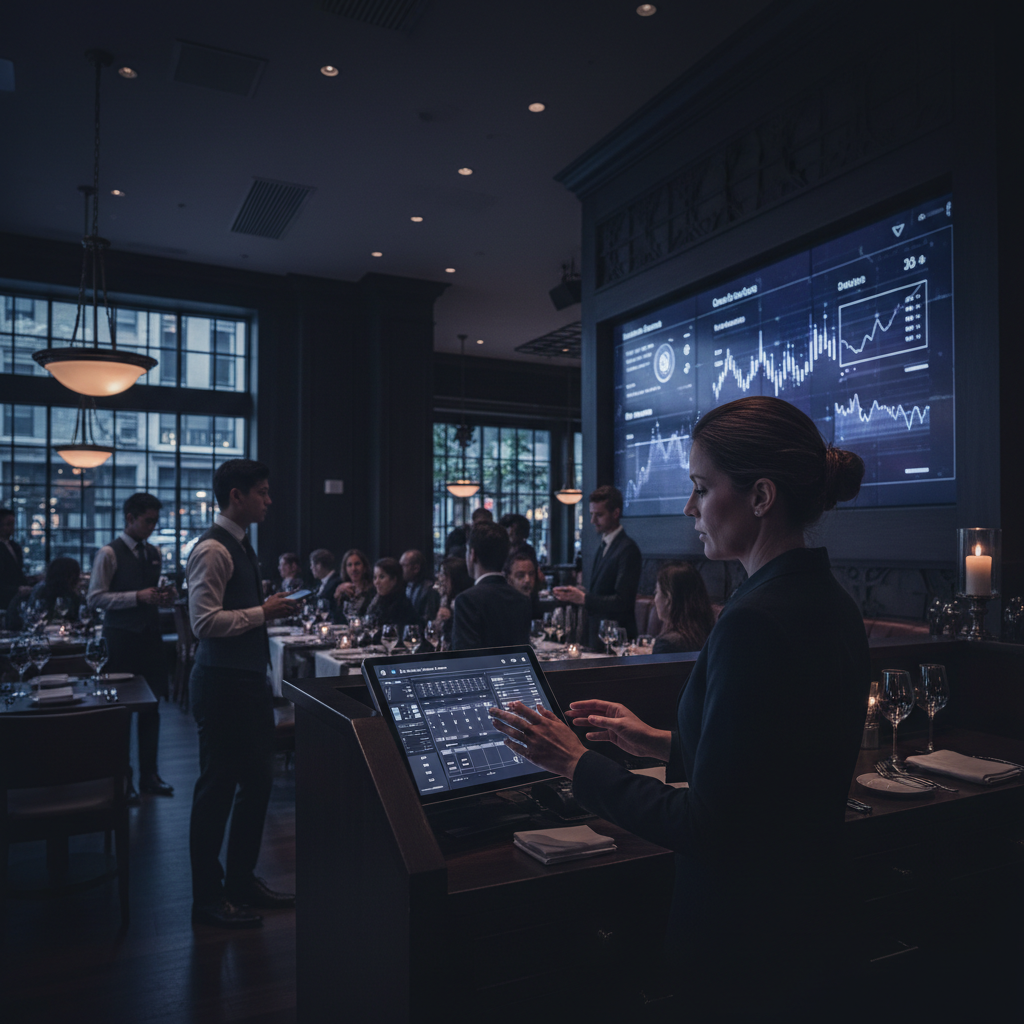
How AI Can Help Restaurants Manage Reservations More Efficiently
Restaurant reservations used to be a simple host stand task. A guest called, someone wrote down the time, and the team did its best to stay organized. That approach still works in some small dining rooms, but it breaks fast once reservations come from multiple channels, demand fluctuates by daypart, and the business wants better control over no-shows, table pacing, guest communication, and repeat visits.
Build a loyalty program your customers will actually use
See Loop.fans Loyalty & RewardsThat is where AI starts becoming useful. Not in a gimmicky, robotic way, and not as a replacement for hospitality, but as an operational layer that helps restaurants make smarter decisions and reduce preventable friction. When people search for how AI can help restaurants manage reservations, the real answer is about speed, organization, prediction, and better guest handling at scale.
AI is not a magic switch. It does not fix a broken floor plan, weak reservation policies, or poor service standards. What it can do is help restaurants automate repetitive booking work, surface useful patterns from reservation data, improve response time, and support teams that are already trying to run a clean operation. For independent restaurants, hospitality groups, and booking-heavy venues, that can translate into fewer mistakes, better table utilization, and a smoother guest experience.
What AI actually means in restaurant reservation management
Need a free booking system for your restaurant? Try our free restaurant booking system — Online reservations with table management and automatic confirmations.
In practice, AI in restaurant reservations usually means software that can learn from patterns, automate decisions, or assist with guest communication based on real booking data. It is different from a static reservation form or a basic booking widget because it can react to trends, make recommendations, and reduce manual handling.
That can include:
- Automated guest messaging that feels faster and more contextual
- No-show risk detection based on party size, timing, booking source, and history
- Smarter table pacing using historical service patterns
- Demand forecasting for peak nights, slow periods, and staffing decisions
- Reservation triage for large parties, special requests, or edge cases
- Natural-language support for answering guest questions or collecting requests
The point is not to make the restaurant feel automated. The point is to let automation handle repetitive operational work so the team can spend more attention on actual hospitality.
Why restaurants are looking at AI for reservations
Restaurants face a specific set of booking problems that AI is well suited to help with. Reservation demand is variable. Guest behavior is inconsistent. Staff time is limited. And many decisions that affect the guest experience happen quickly, often during service or in the hours leading up to it.
Operators typically want help with the same issues again and again:
- too many manual reservation changes
- missed calls and delayed confirmations
- no-shows and late cancellations
- booking patterns that are hard to interpret manually
- overloaded hosts during peak periods
- guest notes and preferences getting lost
- difficulty balancing reservations and walk-ins
AI can support these problems because it is good at spotting patterns in large volumes of small decisions. A host may know a Friday 7:30 PM slot tends to attract higher no-show risk for large groups booked late in the week. AI can spot that pattern across months of data and help the team respond more consistently.
AI can improve confirmation and reminder workflows
One of the easiest and most practical uses of AI in restaurant reservations is communication. Many restaurants already send confirmations and reminders, but those messages are often static and generic. AI-supported systems can make that communication more responsive without making it sound cold.
For example, AI can help:
- adjust reminder timing based on the booking type or past guest behavior
- detect when a booking may need extra confirmation because it looks risky or unusual
- answer common guest questions about parking, late arrival policy, seating preferences, or menu limitations
- route high-risk changes to staff instead of treating every case the same way
If a guest books a table for eight during a holiday weekend, the reservation may need different messaging than a repeat guest booking a two-top on a Wednesday afternoon. AI can help make those distinctions automatically. That improves clarity for guests and helps reduce preventable no-shows.
AI helps identify and reduce no-show risk
No-shows are one of the most obvious ways reservation inefficiency turns into lost revenue. Restaurants have been trying to reduce them for years using reminders, deposits, card holds, and policy language. AI adds another layer by helping the business identify patterns that humans may not catch consistently.
A reservation system with AI support can analyze factors like:
- party size
- time of day
- day of week
- lead time before booking
- source channel
- past attendance history
- last-minute changes or repeated modifications
From there, it can flag reservations that are more likely to cancel late or no-show. That does not mean automatically rejecting those bookings. More often, it means applying smarter communication, requiring a card hold for certain cases, or releasing waitlist inventory more strategically.
This is especially useful for restaurants that cannot afford to treat every reservation the same way. A premium Saturday night booking and a low-risk weekday lunch reservation should not always live under the same policy logic.
AI can support smarter table pacing
Reservation pacing is one of the hardest things to get right manually. If too many guests arrive at once, service quality suffers. If you leave too much buffer, you may underuse your dining room. Most restaurants solve this with a combination of instinct, historical memory, and rough rules about turn times. AI can improve that process.
By looking at historical service data, an AI-enabled booking system can estimate where bottlenecks typically happen and suggest better spacing between arrivals. It can also help adjust assumptions by daypart or booking type. A brunch service with quick turnover behaves differently than a tasting-menu dinner or a wine-focused evening with long dwell times.
AI can help restaurants answer questions like:
- Are our 90-minute turns too aggressive on Saturdays?
- Should we stagger 4-tops differently than 2-tops?
- Which service windows regularly overload the kitchen?
- How much inventory should we preserve for walk-ins?
Used well, this kind of insight helps the room feel more controlled without making the reservation book overly rigid.
Forecasting demand is another major advantage
Restaurants already know that demand shifts based on seasonality, weather, local events, holidays, pay cycles, and countless smaller patterns. The challenge is turning those signals into practical reservation decisions. AI can help by forecasting likely demand and helping teams prepare earlier.
Forecasting can support decisions such as:
Free loyalty program — no app download needed for customers
See Loop.fans Loyalty & Rewards- when to open more reservation inventory
- when to tighten large-party rules
- when to apply deposits or card holds
- how to plan host and floor staffing
- when to promote slower seatings through marketing
If the system knows that the second Friday of the month tends to spike due to a nearby event, or that rainy weekday evenings reduce walk-ins but not reservations, it can help management make more informed decisions. This does not eliminate human judgment. It gives human judgment better information.
AI can make large-party and special-request handling easier
Not every booking fits neatly into a standard reservation flow. Large parties, accessibility requests, celebrations, allergy notes, or seating preferences often create extra back-and-forth. Hosts and managers spend a surprising amount of time sorting these requests, clarifying what is possible, and deciding which ones need personal follow-up.
AI can help by categorizing incoming requests, identifying urgency, and routing them to the right workflow. For example:
- a standard anniversary note may stay attached to the reservation automatically
- a large-party request with unclear details may trigger a follow-up form
- an accessibility request may be surfaced more prominently for staff
- a vague guest note can be summarized into a cleaner internal instruction
This matters because good hospitality often depends on details being seen at the right moment. AI does not create hospitality on its own, but it can make sure the team does not miss important context.
Guest-facing AI can reduce repetitive phone and inbox work
Another practical use case is AI-assisted guest support before the reservation ever reaches the floor. Restaurants receive the same questions repeatedly: Do you take walk-ins? Can I bring a cake? Do you have patio seating? What is your cancellation policy? Are you kid-friendly? If those questions always require a staff member to respond manually, that creates drag.
AI-powered assistants or chat flows can answer many routine questions instantly, especially when connected to the restaurant's real reservation policies. They can also help guests start the reservation process, direct them to the booking widget, or clarify whether a request needs manual review.
This is most valuable when it reduces friction without becoming annoying. A good AI assistant should know when to answer simply and when to hand the conversation to a human. Hospitality still depends on judgment, especially when the situation is sensitive or unusual.
AI can connect reservations to stronger guest retention
Reservation management should not end when the guest sits down. One of the biggest missed opportunities in hospitality is treating the reservation as a one-time transaction instead of the beginning of a repeatable relationship. AI can help restaurants segment guests based on behavior and support better follow-up after the visit.
For example, AI can help identify:
- guests who return frequently and may be ready for VIP treatment
- people who book once but never come back
- customers who respond well to event or tasting-menu invitations
- segments that are likely to return during specific seasonal windows
This is where platforms like Loop.fans become especially relevant. When restaurants want to connect reservation behavior with loyalty, rewards, fan engagement, and repeat-visit campaigns, the value of the booking data increases dramatically. AI can help surface the right audience patterns, while the platform handles the ongoing relationship-building side.
AI is most effective when the reservation fundamentals are already solid
It is important to be realistic. AI works best when the underlying reservation operation is already reasonably clean. If your policies are unclear, your availability rules are inaccurate, your host workflow is inconsistent, or your booking data is messy, AI will not magically solve that. It may even amplify confusion.
Before adding AI into the stack, restaurants should make sure they have:
- clear reservation rules
- consistent guest communication standards
- reliable booking data
- a defined owner for edge cases and overrides
- a booking system that can actually capture useful patterns
Think of AI as a multiplier. It improves a healthy process faster than it repairs a broken one.
How to evaluate AI tools for restaurant reservations
Restaurants should be careful not to buy into buzzwords. If a vendor claims to use AI, ask what it actually does in the reservation workflow. The right evaluation questions are practical:
- Does it reduce staff workload in a real measurable way?
- Can it lower no-show rates or improve pacing?
- Does it make communication faster without sounding robotic?
- Can the team understand and override its decisions?
- Does it fit our service model and guest expectations?
The best AI features are often the least flashy. They are the ones that quietly reduce repetitive tasks, improve timing, and help the dining room run more predictably.
Common mistakes to avoid with AI in reservations
AI can create problems if it is implemented carelessly. A few mistakes show up often:
- Over-automating guest communication: messages start sounding generic or inappropriate
- Relying on AI without policy clarity: the system makes decisions on top of weak rules
- Ignoring human oversight: staff need visibility and control
- Using AI where a simple workflow would do: not every restaurant needs advanced prediction on day one
- Forgetting the brand voice: hospitality should still feel human and aligned with the restaurant's tone
The right approach is usually gradual. Start with the highest-value use cases such as reminders, no-show prevention, and demand forecasting. Then expand if the results are clearly helping operations.
Final takeaway
AI can help restaurants manage reservations by reducing repetitive admin work, improving guest communication, identifying no-show risk, forecasting demand, and supporting smarter table pacing. Used properly, it helps teams stay organized and make better decisions without stripping the experience of hospitality.
The real benefit is not that AI books tables on its own. It is that it gives restaurant teams better control over the details that affect revenue and service every day. For booking-heavy restaurants and hospitality brands focused on direct guest relationships, that can be a meaningful competitive advantage.
If your reservation process already has a solid foundation, AI can become a practical layer that saves time and improves consistency. And if you pair those insights with a stronger loyalty and retention strategy, reservations stop being just a calendar function and start becoming a smarter part of long-term guest growth.
Start your loyalty program today — free
See Loop.fans Loyalty & RewardsAlso on Loop.fans: Build your restaurant's online presence with our AI website builder for restaurants — includes CRM, loyalty, and online booking in one place.