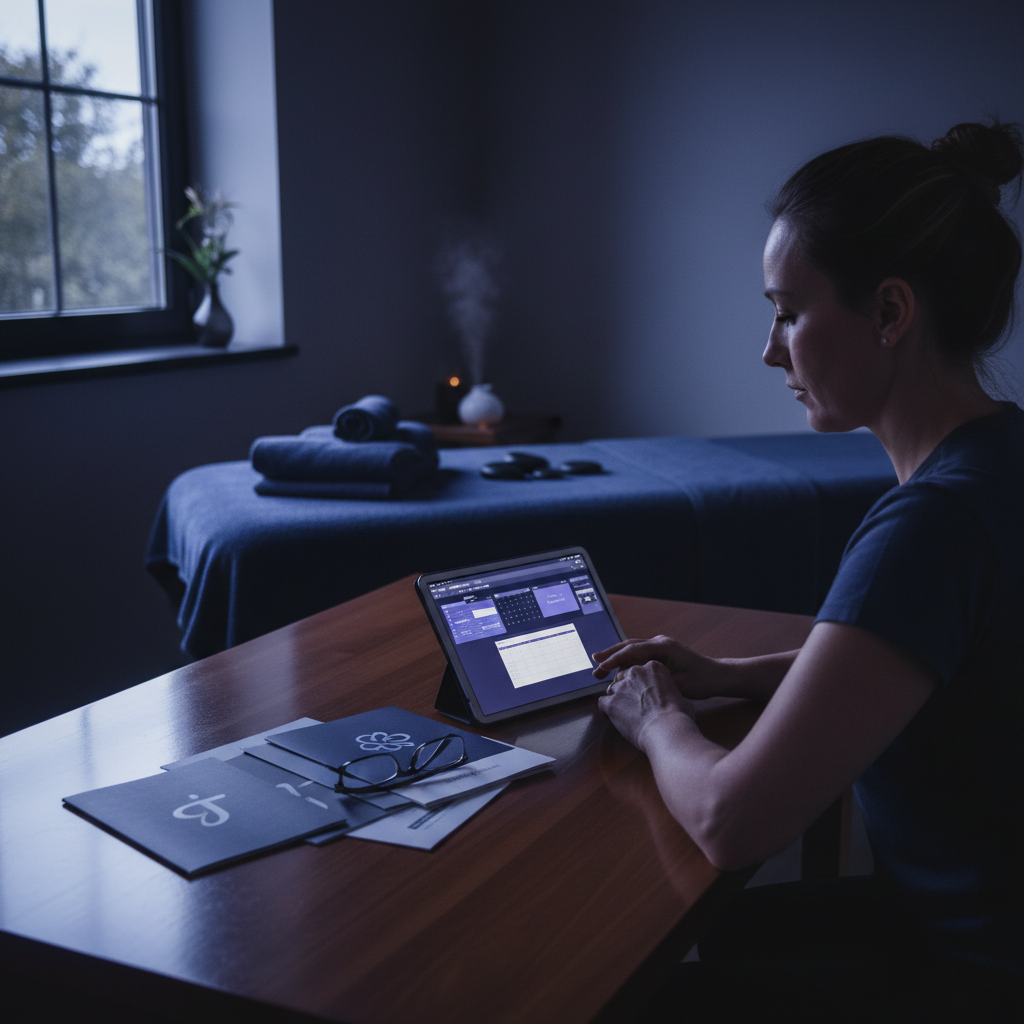
Massage Therapy Scheduling Software: Best Options for Independent Therapists
Managing a massage practice without good scheduling software means missed appointments, double-bookings, awkward phone tag, and hours of admin work that should be spent on clients. The right software automates the routine, reduces no-shows, and creates a professional experience. This guide covers what to look for and the top options for independent therapists.
What Scheduling Software Needs to Do
Need a free booking system for your studio or salon? Try our free appointment scheduling tool — Class slots, staff calendars, and client reminders — free.
Independent massage therapists have specific needs: 24/7 online booking (clients should book at 11pm without calling), service and duration selection (30/60/90 minutes, modality types), intake forms collected before appointments (health history, pressure preference, focus areas), automated reminders via text and email (reduces no-shows 30–50%), payment and deposit collection at booking, client history and notes (preferences, medical considerations), and automated rebooking prompts after appointments.
Top Scheduling Options
Jane App — Best Overall for Independent Therapists
Purpose-built for health and wellness practitioners. Handles online booking, intake forms, SOAP notes, payments, and client records in one interface. Intake form functionality is particularly strong — create custom health history forms clients complete before their first appointment. Starts at ~$74/month (Canadian) for a solo practitioner. Popular with RMTs in Canada, equally good for US therapists.
Vagaro — Best Feature-for-Price Balance
Most popular platform for independent beauty and wellness professionals. Handles booking, payments, memberships, packages, gift cards, loyalty, and marketing tools. Starting price ($25/month for solo practitioner) is lower than most competitors with a comprehensive feature set.
Square Appointments — Best for Square Users
If already using Square for payments, the integration is seamless. Free tier handles basic booking for a solo practitioner. Paid tier ($29/month) adds automated reminders, multiple staff, more features. Not as massage-specific as Jane or Vagaro, but the payment ecosystem integration is hard to beat.
Fresha — Best Free Option
Free to use — charges a small fee per new client booking. Handles online booking, client records, reminder texts, and basic intake forms. Lowest-risk starting point for a new therapist building a client base. Compare per-booking fees to a flat subscription as volume grows.
Acuity Scheduling — Best for Simple Setups
Clean, easy to set up, handles the basics well: booking page, automated reminders, intake forms, calendar sync. Lacks spa-specific features (no memberships, no gift cards, limited loyalty). At $16–$27/month, reasonable for therapists wanting simplicity over depth.
Transitioning Clients to Online Booking
Clients default to texting or calling if that's what they're used to. Moving them to online booking takes active promotion: add your booking link to every text ("Book online anytime at [link] — it's faster than texting me!"); add to email signature, Instagram bio, and Google Business Profile; demonstrate at checkout ("Want to rebook right now? You can do it on your phone in 30 seconds — let me show you"); offer a small incentive for first online booking. Within 60–90 days of consistent promotion, most clients will prefer online booking because it genuinely is more convenient for them.
Pairing Scheduling With Loyalty
Scheduling software handles operations; a loyalty program handles retention and emotional engagement. They do different jobs and are most powerful together. A massage membership program works best when scheduling software handles billing and booking, and a loyalty platform handles gamified engagement — check-in streaks, milestone rewards, referral tracking. Loop.fans is designed to work alongside existing booking software rather than replace it.
The massage therapist marketing stack that compounds most effectively: scheduling software (operational) + loyalty platform (retention) + Google Business Profile (discovery). Together, these three create a practice that books itself, retains clients, and grows through word of mouth.
Making Your Choice
New independent therapist: start with Fresha (free), upgrade when per-booking fees exceed a flat subscription cost. Established therapist wanting the best client experience: Jane App. Best value with most features: Vagaro. Already in the Square ecosystem: Square Appointments. Whatever you choose, add Loop.fans for the retention layer that booking software doesn't provide.
Frequently Asked Questions
What is the best scheduling software for an independent massage therapist?
Jane App is the strongest option — purpose-built for wellness practitioners with excellent intake forms and client records. Vagaro is the best value alternative with more built-in tools at a lower price.
Is there free scheduling software for massage therapists?
Fresha is the best free option — no monthly fee, per-transaction charges for new client bookings. Suitable for new therapists building their client base.
How do I reduce no-shows as a massage therapist?
Automated SMS reminders 24–48 hours before appointments reduce no-shows by 30–50%. Deposit requirements at booking add additional protection.
Should massage therapists use online booking?
Yes — online booking captures appointments from clients who won't call during business hours. It's especially valuable for capturing evening and weekend bookings.
What intake forms should I collect before a massage?
Health history (conditions, medications, injuries), pressure preference (light/medium/firm), focus areas, and consent for treatment. Collecting online before the appointment saves time and creates a more professional experience.
Making It Work: Implementation Priorities
Understanding the tactics is only half the equation. Knowing which to implement first — and in what order — determines whether your investment in massage therapy scheduling software delivers results quickly or stalls in the planning phase.
A proven implementation sequence for most small businesses:
- Foundation first: Set up your Google Business Profile, enable online booking, and establish a basic email list. These are free or near-free and form the foundation everything else builds on.
- Retention before acquisition: Before spending on ads or new client campaigns, optimize your existing client retention. A loyalty program that brings back 20% more existing clients is worth more than an ad campaign attracting 20% more new clients, because existing clients cost nothing to acquire and spend more.
- Automate follow-up: Set up automated reminders, rebooking prompts, and loyalty milestone notifications. Once configured, these systems run without ongoing effort and consistently produce the highest per-effort ROI of any marketing activity.
- Add referral mechanics: Once your retention system is running, add a formal referral program. Your best clients become your best marketers — but only if you give them a structure and an incentive.
- Layer in paid acquisition: Only after your retention and referral systems are in place should you invest in paid ads. Why? Because every dollar in paid acquisition is wasted if the clients it brings in churn in 60 days.
The Role of Data in Long-Term Growth
The businesses that grow sustainably are the ones that make decisions based on data rather than intuition. You don't need a data science team — you need a handful of consistent metrics tracked monthly.
The four numbers that matter most for any service business:
- New client count: how many first-time clients did you see this month? This is your acquisition metric.
- Repeat client rate: what percentage of last month's clients came back this month? This is your retention metric.
- Average transaction value: how much does the average client spend per visit? This is your monetization metric.
- Loyalty program enrollment rate: what percentage of clients are enrolled in your loyalty program? This is your engagement metric.
Track these monthly for 6 months and you'll see patterns that tell you exactly where to focus. If new client count is growing but repeat rate is dropping, you have a retention problem. If repeat rate is strong but average transaction value is stagnant, you have an upsell opportunity. The data tells the story; you just have to read it.
For the loyalty infrastructure that generates this data automatically — enrollment rates, visit frequency, reward redemption, referral tracking — Loop.fans provides the analytics dashboard that makes this monthly review a 10-minute exercise rather than a manual spreadsheet effort. The customer loyalty program software that works best for small businesses is the one that gives you actionable insights without requiring a dedicated analyst to interpret them.
Building Word-of-Mouth Into Your System
Word of mouth is the highest-trust, lowest-cost marketing channel available to any small business. The problem is that most businesses treat it as something that happens to them rather than something they actively build. There's a significant difference between "hoping clients tell their friends" and "having a system that consistently generates referrals."
The core components of a systematic word-of-mouth program:
- Deliver a remarkable experience at every touchpoint: Word of mouth starts with the experience, not the marketing. A client who has an exceptional experience doesn't need to be incentivized to talk about it — they want to tell people. A client who has a mediocre experience won't refer regardless of what incentives you offer.
- Make it easy to refer: Most clients who want to refer don't because they're not sure how to do it. A simple referral link ("Send this to a friend and you'll both get [reward]") removes the friction between intention and action.
- Ask directly at the right moment: The best time to ask for a referral is immediately after a positive experience — right after a great session, immediately after a compliment, or right after a client shares that they got a great result. Asking in that moment feels natural; asking in a generic monthly email does not.
- Track and thank referrers: When a referral converts, notify the referring client immediately: "Your friend just joined — your free [reward] is ready!" This closes the loop, creates a positive emotional moment, and reinforces the referral behavior for the future.
A word of mouth marketing strategy for service businesses is most powerful when it's integrated with your loyalty program. Clients who are already loyal and feel recognized are more likely to refer than clients who feel like just another transaction. Tools like Loop.fans combine loyalty tracking and referral management in one system, so you can see which of your most loyal clients are also your best referrers — and reward them accordingly.
Customer Retention: The Compounding Advantage
Customer retention is one of the few areas in business where the returns genuinely compound over time. A client retained for 3 years is worth far more than three clients retained for 1 year each — not just because of the cumulative revenue, but because of the referrals, the increased spend on premium services, the lower support burden, and the social proof they provide.
The math: if you retain 80% of your clients annually (losing 20% per year), your client base from 5 years ago represents 33% of your current base. If you improve retention to 90% (losing only 10% per year), that same cohort represents 59% of your current base — nearly double the long-term value from a 10-point retention improvement.
This is why the most successful service businesses obsess over retention metrics rather than acquisition metrics. Acquisition brings clients in the front door; retention prevents them from walking out the back. The businesses that win long-term are the ones who close the back door first. For comprehensive frameworks on measuring and improving retention, see client retention strategies and how to increase repeat customers — both provide specific, actionable approaches grounded in what works for service businesses specifically.
Advanced tips and next steps for massage therapy scheduling software
Getting scheduling software live is step one. The practices that separate high-performing massage therapy practices from average ones are mostly about how they use the data and automation those tools provide.
1. Set up automatic rebooking prompts at the right interval. Most massage therapists recommend clients return every three to four weeks. Configure your software to send a rebooking nudge exactly 21 days after each completed appointment. This simple automation, done consistently, significantly reduces the gap between visits and increases annual revenue per client without any manual follow-up.
2. Use intake forms to personalize treatment notes. Modern scheduling platforms support digital intake forms that clients complete before their first visit. Beyond the standard health history, include questions about their primary goals — stress relief, injury recovery, athletic performance — and make those answers visible to the therapist at session time. Personalized sessions produce higher satisfaction scores and better rebooking rates.
3. Protect your revenue with a clear cancellation policy enforced by your software. Manual cancellation policies are hard to enforce consistently. Scheduling software can hold a card on file and automatically apply a cancellation fee for no-shows or late cancellations. This recovers real revenue that would otherwise disappear and filters out low-commitment clients over time.
4. Analyze your booking lead time to optimize your schedule. Most scheduling platforms show you how far in advance clients book. If the average lead time is three days, you can time your promotional outreach to fill slots about four days out. If walk-in demand is high, block a small number of same-day slots rather than releasing your full schedule weeks ahead. Lead time data makes your calendar a strategic tool, not just a grid.
The therapists who grow the fastest are rarely the most talented — they are the most systematic. Scheduling software gives you the systems. Using the data it generates is what compounds your results over time.
Ready to get started?
Launch your free loyalty program — Free digital punch card. No customer app required.