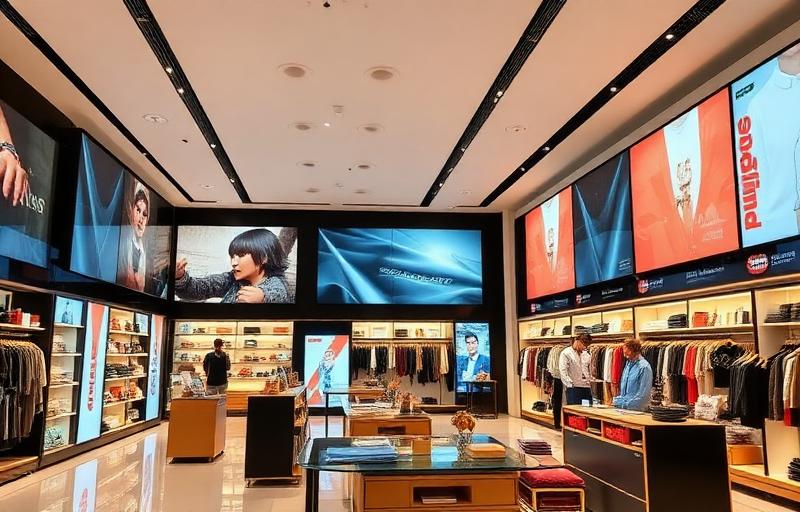
Omnichannel Loyalty: Connecting In-Store Online Customer
Customers don't think in channels. For more on this, see our guide to loyalty program ideas. They think about your brand. But most loyalty programs are built around a single channel — either online or in-store — which means customers who regularly switch between both get a fragmented, frustrating experience that erodes rather than builds loyalty. Omnichannel loyalty programs solve this by creating a unified reward experience across every touchpoint, turning channel-switching customers into your most engaged advocates instead of your most annoyed ones.
Build a loyalty program your customers will actually use
See Loop.fans Loyalty & RewardsThe Problem With Single-Channel Loyalty
Want to calculate the ROI of a loyalty program? Try our free loyalty ROI calculator — See the revenue impact in minutes.
The scale of the channel gap is striking. For more on this, see our guide to customer retention software. In most retail brands, 50–70% of in-store customers have also made online purchases in the past 12 months. Omnichannel customers spend 1.5–4× more than single-channel customers. They're more loyal, more valuable, and more likely to advocate. Yet most loyalty programs treat them as two separate customers — one who earns online and another who earns in-store, with no connection between the two.
The consequences are real: a customer who earns points online but can't redeem them in-store feels punished for shopping in the way they prefer. For more on this, see our guide to gamification in loyalty programs. A customer who buys in-store for the first time and then tries to find their points balance online gets confused and disengaged. Channel siloes in your loyalty program signal that you haven't thought carefully about the customer experience — and customers notice.
What Omnichannel Loyalty Actually Means
A true omnichannel loyalty program has three core characteristics:
- Unified identity: one customer profile across all channels, accessible everywhere the customer interacts with your brand
- Cross-channel earning: the same points economy across in-store, online, app, and any other channel — a purchase is a purchase regardless of where it happens
- Cross-channel redemption: rewards earned in one channel can be used in any other channel — a discount earned online can be used in-store and vice versa
Beyond these three basics, advanced omnichannel loyalty programs also enable cross-channel personalization (what a customer does in-store informs what they see online) and cross-channel communication (your email and SMS reflect their full relationship with your brand, not just one channel).
Building the Tech Stack for Omnichannel Loyalty
The Customer Identity Layer
Omnichannel loyalty starts with customer identity — a unique identifier that connects in-store and online behavior to the same profile. Options include:
- Email or phone number: the simplest universal identifier. Collected at POS in-store and at account creation online. Customers type their email or phone to access their points in either channel.
- Loyalty card or app barcode: a physical card or digital wallet card that gets scanned at POS. More friction than email but more reliable attribution and better customer experience once the habit is formed.
- NFC/contactless: increasingly available loyalty apps that tap-to-earn at compatible POS terminals. Best customer experience but requires investment in terminal compatibility.
Whatever identifier you choose, it must work in both directions: customers should be able to look up their account in-store without the card (via email or phone), and the app or web portal should show in-store purchase history alongside online history.
POS Integration
The core technical challenge of omnichannel loyalty is POS integration — getting your loyalty platform to communicate in real-time with your in-store point-of-sale system. Modern loyalty platforms support native integrations with major POS providers (Square, Lightspeed, Toast, Clover, Shopify POS, and others). For custom POS systems, API integration is typically available but requires development work.
What you need from POS integration: real-time points issuance on every transaction, real-time redemption processing, loyalty tier status displayed to cashiers, and customer purchase history available at POS for personalized service.
Unified Dashboard
Customers who shop across channels need a single place to see their full relationship with your brand: total points balance (from all channels), complete purchase history, current tier status, available rewards, and referral activity. This dashboard should be accessible via your app, web portal, and — where possible — via QR code scan at your physical location.
Omnichannel Loyalty in Practice: What Good Looks Like
The Unified Shopping Basket
A customer browses online, saves items to their wishlist, then visits the store and buys. Your in-store associate can see their wishlist (with customer permission), help them find the items, and the purchase is recorded to the same loyalty account. The customer earns the same points they would have online. Their online experience reflects the in-store purchase. This is basic omnichannel — and most brands still haven't built it.
Cross-Channel Segmentation and Communication
Advanced omnichannel loyalty uses the combined online and in-store data to segment customers more precisely and communicate more relevantly. A customer who buys online but visits in-store seasonally gets different communications than one who shops exclusively online. A customer who always buys premium product lines in-store but middle-tier products online might be a target for an in-store exclusive that plays to their revealed premium preference.
In-Store Exclusive Loyalty Benefits
Some of the most effective omnichannel loyalty mechanics give customers specific reasons to visit in-store: loyalty member-exclusive in-store events, in-store-only reward redemptions (experiences that can't be replicated online), bonus points for in-store purchases on specific days or around specific product categories. These mechanics drive foot traffic while simultaneously deepening the loyalty relationship.
Overcoming the Omnichannel Integration Challenges
Data Deduplication
When you have separate online and in-store customer databases, merging them requires careful deduplication — identifying when an online customer and an in-store customer are the same person. Use email and phone number as primary matching keys, with secondary matching on name + address for records that don't share digital identifiers. Expect 10–20% of records to require manual review during initial merge.
Staff Training
In-store staff are the front line of omnichannel loyalty. They need to understand the program, be able to look up customer accounts quickly, know how to handle points queries, and be motivated to promote enrollment. Regular training updates and staff-specific incentives for loyalty enrollment are investments that pay back in measurably higher program participation rates.
Free loyalty program — no app download needed for customers
See Loop.fans Loyalty & RewardsManaging the Transition
If you're migrating from separate online and in-store programs to a unified system, communicate the change proactively to your customer base, provide clear instructions for linking accounts, and offer a transition bonus (extra points for linking within the first 30 days) to motivate customers to connect their profiles before the old programs sunset.
Measuring Omnichannel Loyalty ROI
- Cross-channel customer rate: percentage of customers who shop in both channels within a 12-month period
- LTV differential: LTV of omnichannel customers vs. single-channel customers (typically 1.5–4×)
- Channel shift: change in in-store vs. online sales mix attributable to omnichannel loyalty mechanics
- In-store loyalty enrollment rate: percentage of in-store customers enrolled in loyalty program
- Cross-channel redemption rate: percentage of rewards earned in one channel and redeemed in another
Getting Started With LoopFans
LoopFans provides omnichannel-ready loyalty infrastructure — a unified customer identity layer, cross-channel points management, POS integration support, and a customer dashboard that works across web, mobile, and in-store. Explore LoopFans or see our guide to loyalty programs and rewards for the broader strategy framework.
Understanding Omnichannel Loyalty: Connecting In-Store and Online Customer Experiences in context
Omnichannel Loyalty: Connecting In-Store and Online Customer Experiences is one of those topics that looks simple on the surface but rewards deeper exploration. For creators and brands operating on Loop.fans, the context matters as much as the concept. Knowing what omnichannel loyalty instore online means is just the entry point — the real value comes from understanding when it applies, how it interacts with other tactics, and what a high-quality execution actually looks like versus a low-effort attempt that delivers minimal return.
Audiences have become skilled at recognizing generic content. When a page genuinely unpacks a topic with specificity and actionable depth, it builds trust in a way that shallow summaries simply cannot. That trust compounds over time: readers bookmark, return, share, and link. For omnichannel loyalty instore online specifically, the depth of coverage directly affects how useful the page is for someone actually trying to implement or evaluate the concept in a real context.
Why omnichannel loyalty instore online matters for audience-driven growth
Growth on creator platforms is rarely linear. The most effective strategies tend to build participation systems — environments where audiences have reasons to return, contribute, and deepen their connection to a creator or brand. Omnichannel Loyalty: Connecting In-Store and Online Customer Experiences fits into this framework by addressing one specific pressure point in that system. Whether it improves discovery, retention, monetization, or community engagement depends on how it is applied, but the underlying principle is consistent: sustainable growth comes from compounding audience behavior, not one-off spikes.
When omnichannel loyalty instore online is treated as an isolated tactic, results tend to be modest and hard to repeat. When it is integrated into a broader strategy — one that connects content, community, and conversion — the outcomes tend to be meaningfully better. The teams that do this well are usually the ones that understand not just what the tactic does, but how it fits into the larger system they are building.
Common implementation mistakes and how to avoid them
The most frequent mistake with omnichannel loyalty instore online is treating it as a one-time effort rather than an ongoing practice. A single campaign, post, or feature rollout rarely moves the needle significantly on its own. The compounding effect that makes these strategies valuable comes from consistency — repeated execution, measurement, refinement, and integration with the rest of the creator's or brand's presence on the platform.
A second common mistake is optimizing for the wrong metric. Vanity numbers — raw impressions, follower counts, surface-level engagement — can look good while the underlying business metrics remain flat. For omnichannel loyalty instore online, the metrics that matter are usually tied to retention, repeat engagement, conversion, and audience lifetime value. Setting those as the primary success criteria from the start forces clearer thinking about what execution actually needs to look like.
- Mistake 1: Running a single activation and moving on before results can compound.
- Mistake 2: Measuring success by reach or impressions instead of retention and conversion.
- Mistake 3: Treating omnichannel loyalty instore online in isolation instead of integrating it with adjacent content and community tactics.
- Mistake 4: Skipping the documentation step — what worked, what did not, and why.
Practical execution framework for Omnichannel Loyalty: Connecting In-Store and Online Customer Experiences
Effective execution of omnichannel loyalty instore online usually follows a recognizable pattern regardless of the specific context. The first step is definition: what specific outcome does this tactic need to drive, and what does success look like in measurable terms? The second step is baseline: what is the current state, and what would a meaningful improvement look like within a realistic timeframe? The third step is activation: what is the minimum viable version of this tactic that can be tested quickly and inexpensively?
From there, the pattern is iteration. Run the activation, measure against the defined success criteria, identify what worked and what did not, and refine before the next cycle. Over time, this process builds an institutional understanding of how omnichannel loyalty instore online performs in a specific context — which is far more valuable than any generic best-practice framework. The goal is not to follow a playbook; it is to develop one that is specific to the audience, platform, and creator or brand in question.
Documentation is the step most teams skip, and it is also the step that separates teams that improve over time from those that repeat the same mistakes. After each activation, capture the key decisions, the results, and the one or two things that would be done differently next time. This does not need to be elaborate — a short internal note is enough. The habit of capturing it is what matters.
See also: Reward Programs for Small Businesses: Complete Setup Guide
Start your loyalty program today — free
Also on Loop.fans: Build your brand's digital hub with our AI website builder for consumer brands — CRM, loyalty, and UGC tools included.
See Loop.fans Loyalty & RewardsReady to get started?
Start free on Loop.fans — Free loyalty tools for businesses of every size.