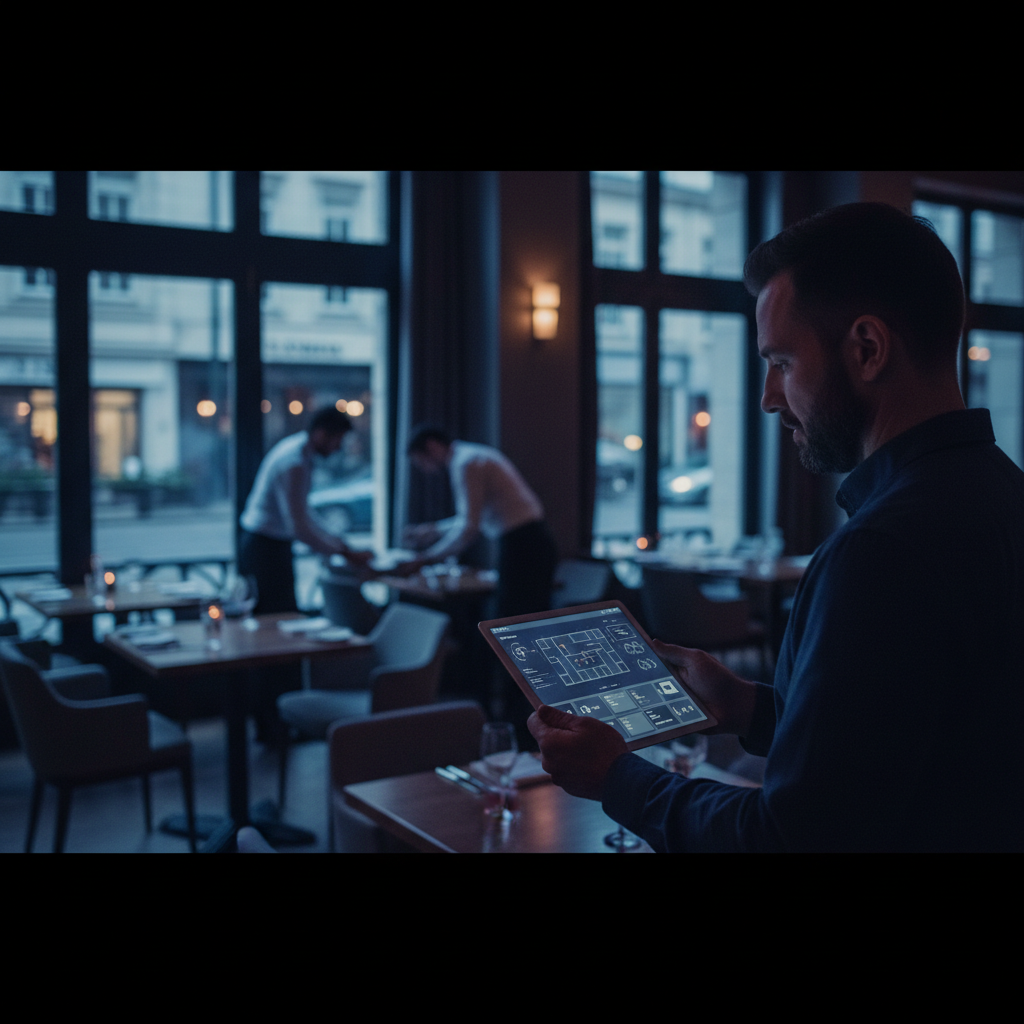
Online Table Booking System for Restaurants: What to Look For and How to Choose
An online table booking system for restaurants can do much more than collect reservations. When it is set up well, it helps guests book faster, helps staff manage service more smoothly, and helps the business protect revenue by reducing no-shows and improving table flow. When it is set up poorly, it creates confusion, double bookings, extra phone calls, and unnecessary pressure at the host stand.
Build a loyalty program your customers will actually use
See Loop.fans Loyalty & RewardsThat is why choosing a restaurant booking system should not be treated as a simple software purchase. It is an operations decision. The right system becomes part of your service model, your website conversion path, and your guest communication process. The wrong one becomes another layer your team has to work around.
This guide explains what an online table booking system actually does, which features matter most, how different restaurant types should evaluate tools, and how to choose a setup that supports direct reservations without overcomplicating the guest experience.
What is an online table booking system for restaurants?
Need a free booking system for your restaurant? Try our free restaurant booking system — Online reservations with table management and automatic confirmations.
An online table booking system is software that allows guests to reserve a table digitally and allows the restaurant to manage those reservations in a structured way. It usually includes a booking widget or reservation page, a dashboard for staff, availability rules, confirmation messages, and some level of guest data tracking.
At the simplest level, the system lets a guest choose a date, time, and party size. At a more advanced level, it can manage turn times, pacing, sections, deposits, waitlists, and repeat-guest information. Some systems focus mainly on direct website bookings, while others combine booking with discovery marketplaces, guest marketing, or loyalty workflows.
The key point is this: a booking system is not only about convenience. It is also about controlling how reservation demand enters the dining room.
Why restaurants move to online table booking systems
Many restaurants start with phone bookings, direct messages, spreadsheets, or a basic request form. That can work for a while, especially at lower volume, but the cracks show quickly once reservations become a daily part of service.
Restaurants typically adopt an online booking system because they want to:
- reduce phone interruptions during prep and service
- avoid double bookings and scattered reservation notes
- give guests a faster booking path from the website or mobile search
- send confirmations and reminders automatically
- manage demand more accurately based on real capacity
- capture guest details that support repeat visits and better hospitality
Even small independent restaurants benefit when bookings move into one clear system. The host stand becomes more consistent, and the guest journey feels more professional.
Core features every restaurant booking system should have
Not every restaurant needs every advanced feature, but some basics matter almost universally. If a platform cannot do these things well, it will struggle in real service.
1. A fast, mobile-friendly booking flow
Guests should be able to book in under a minute. If the process is slow, cluttered, or hard to use on a phone, conversion will drop. Your restaurant website should make the booking call to action obvious, and the reservation flow should feel simple from the first tap to the confirmation message.
2. Real availability controls
The system should reflect your actual service rules. That means booking windows, party size limits, turn times, closed dates, and pacing controls. Without this, the software may accept reservations that look fine on paper but do not fit real kitchen and floor capacity.
3. Automatic confirmations and reminders
These are some of the easiest wins in reservation management. Instant confirmation reassures the guest that the booking worked. Reminder messages reduce forgotten reservations and give people a chance to modify or cancel before the time slot goes dead.
4. Easy staff visibility
Your hosts and managers need a clean view of upcoming bookings, special requests, party sizes, status updates, and timing. If the dashboard is confusing, staff will keep their own side notes, and the system will slowly lose trust.
5. Website embedding or direct integration
A good booking system should work directly on your site or through a clear branded booking path. Direct reservations are often more valuable than sending guests through a detached third-party flow because they keep the relationship centered on your brand.
6. Guest notes and history
Even a modest booking system should support notes for allergies, seating needs, celebrations, and repeat diners. That information helps the team deliver better hospitality and makes future visits easier to manage.
What advanced systems add
As reservation volume grows, or as the service model becomes more complex, restaurants often need more than the basics. That is where advanced booking systems start to matter.
More robust platforms may include:
- table mapping and section management
- waitlists and live availability recovery
- card holds or deposits for high-demand periods
- large-party workflows and inquiry routing
- reporting on no-shows, booking windows, and peak demand
- integrations with CRM, email, loyalty, or POS tools
- multi-location support for hospitality groups
These features are not automatically necessary, but they become valuable when reservation management starts affecting labor, revenue protection, and guest retention in a more serious way.
How to choose based on your restaurant type
The best online table booking system depends heavily on how your restaurant actually operates. One of the biggest mistakes owners make is choosing software based on what another venue uses rather than what their own room needs.
Small restaurants and neighborhood spots
If your dining room is relatively simple and you only need a clean direct booking flow, focus on ease of use. You probably need a strong mobile widget, clear confirmations, and enough controls to avoid booking conflicts. You may not need an expensive system built for highly orchestrated floor management.
Busy full-service restaurants
If reservations shape your nightly service, pacing matters more. Look for better arrival spacing, turn-time controls, waitlist options, and guest-note visibility. The goal is to keep the room flowing without overwhelming the host team.
High-demand or premium dining concepts
If no-shows are costly, or if specific seatings carry high revenue value, deposit support and stronger policy enforcement become more important. A system that supports controlled inventory and clear guest communication will likely pay for itself more easily.
Free loyalty program — no app download needed for customers
See Loop.fans Loyalty & RewardsMulti-location hospitality groups
If you run several venues, consistency and reporting matter more. You may want shared standards across locations, location-specific booking rules, centralized visibility, and the ability to compare demand patterns between concepts.
Direct bookings vs marketplace-driven bookings
One major decision is whether your booking system should primarily support direct reservations from your own website or whether it should also rely on a broader marketplace model. Both approaches can work, but they serve different goals.
Direct booking systems are best when you want your website, local search traffic, and social traffic to convert cleanly into reservations under your own brand. This usually creates a stronger relationship with the guest and gives you more control over the booking experience.
Marketplace-oriented systems can help with discovery, especially in competitive cities where diners actively browse reservation platforms. The tradeoff is that your restaurant may be competing in a shared environment rather than owning the full guest path.
For many independent restaurants, the smartest approach is to make the direct website experience as strong as possible first. If you later want additional discovery channels, those can be layered in strategically.
Why website conversion matters so much
Your website may already attract local traffic from search, Instagram, maps, newsletters, and word of mouth. If your booking system is hard to find or awkward to use, that demand leaks away quietly. That is why your table booking system is not just an operations tool. It is also a conversion tool.
A high-performing setup usually includes:
- a clear Reserve or Book a Table button in the site header
- a visible booking call to action on high-intent pages like the homepage, menu page, and contact page
- a mobile-first design with large tap targets and minimal friction
- clear policy copy so guests know what to expect before they submit
Restaurants often spend time improving SEO or social content but forget that the booking step itself must convert. If the path from visit to reservation is weak, the traffic does not produce enough value.
Common mistakes when setting up a booking system
Even good software can fail if the configuration is sloppy or the team is not aligned. Some of the most common problems include:
- Publishing too much availability: the system allows more bookings than the kitchen and floor can support comfortably
- Weak mobile UX: guests abandon the booking flow on phones
- Unclear policies: cancellation rules, late grace periods, and group limits are not communicated well
- No internal workflow: staff do not agree on who checks the book, handles changes, or reviews special requests
- Ignoring reminders: preventable no-shows continue because guest communication is too light
- Choosing for brand hype instead of fit: the software looks impressive but does not match the actual room
Most of these issues are avoidable if you treat booking setup as an operational rollout rather than a plug-and-play website feature.
How to evaluate a system before you commit
Before choosing a platform, run a practical test. Do not rely only on marketing pages or feature comparisons. Use your own service model as the test environment.
- Book a table yourself on mobile. If you were a guest, would you finish the flow?
- Enter your actual operating rules. Test party limits, turn times, closed dates, and same-day cutoffs.
- Simulate a busy service. Can a host quickly see what is coming, what is late, and what needs attention?
- Test modifications and cancellations. How cleanly can a guest or manager adjust a booking?
- Review the data. Does the system give you useful visibility into demand and performance?
This kind of test often reveals whether the system is actually helping the team or just adding another dashboard.
How booking systems connect to retention and loyalty
The most useful reservation systems do not stop at getting the booking. They also help you continue the relationship after the meal. That is where direct guest data becomes more valuable.
Once a guest books and visits, the business can follow up with invitations, special events, loyalty prompts, or return-visit offers. For hospitality brands that want to build repeat business, the booking system becomes part of a larger growth loop.
This is where platforms like Loop.fans can support restaurants that want to pair reservation-driven demand with loyalty, fan engagement, and repeat-visit campaigns. Instead of treating the reservation as a one-time transaction, the business can use it as the beginning of a stronger guest relationship.
When it is time to upgrade your system
A simple booking setup can be enough for quite a while. But there are clear signs you may need a more capable system:
- your reservation volume has grown enough that pacing mistakes hurt service
- no-shows are becoming expensive
- large-party demand creates manual work every week
- the host team is maintaining backup notes outside the system
- you want stronger reporting or guest-history visibility
- you are trying to connect reservations to loyalty and repeat-visit marketing
Upgrading should not be driven by vanity. It should happen when the current system no longer protects operations well enough.
Final takeaway
The best online table booking system for restaurants is the one that fits your dining room, your guest journey, and your service reality. It should make booking easier for guests, make service easier for staff, and give the business better control over demand. That does not always mean buying the most advanced platform. Often it means choosing the system that handles the fundamentals extremely well.
If you start with a clear understanding of your booking rules, your website conversion path, and your upgrade point, you will make a much smarter decision. And if you connect reservations to guest retention over time, your booking system can become much more than a calendar. It can become one of the most practical growth tools in the business.
Start your loyalty program today — free
See Loop.fans Loyalty & RewardsAlso on Loop.fans: Build your restaurant's online presence with our AI website builder for restaurants — includes CRM, loyalty, and online booking in one place.