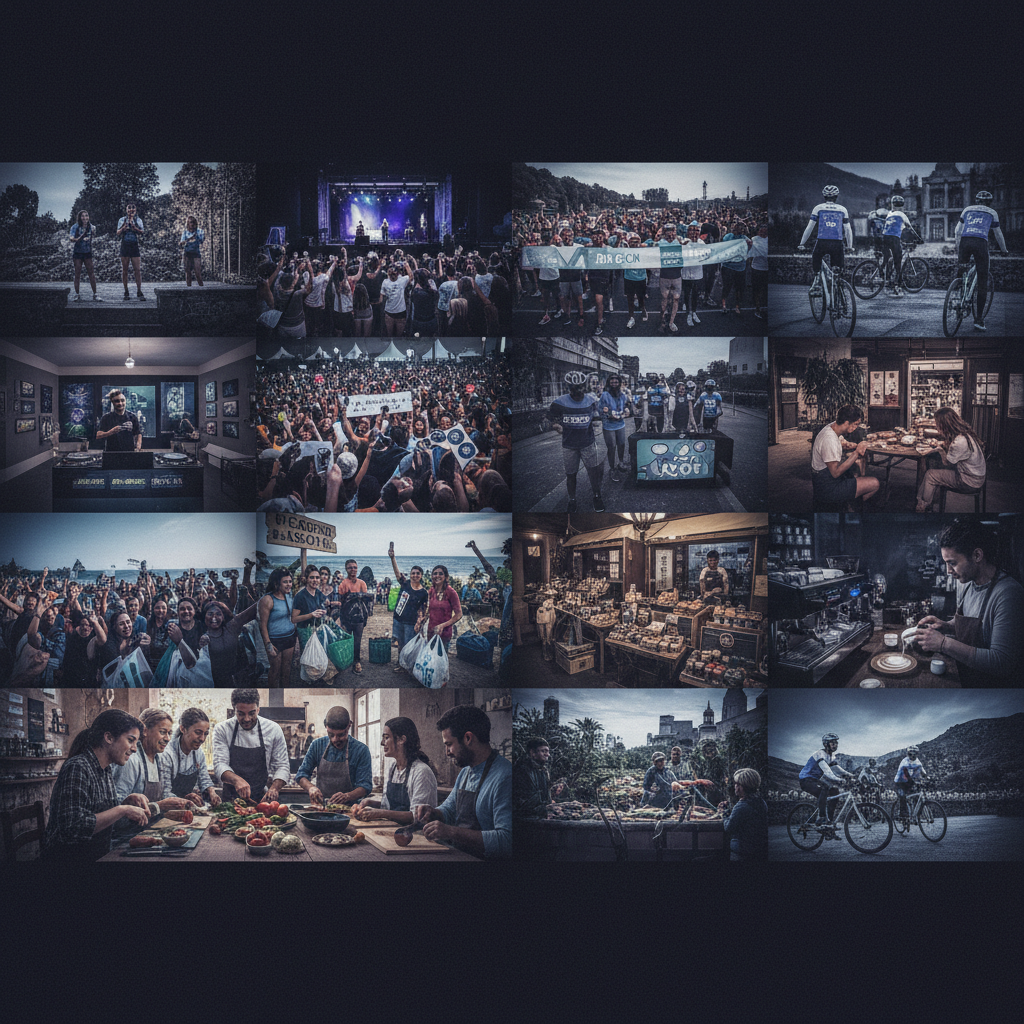
The Participation Economy: 10 Examples Across Tourism, Hospitality, Music, and Events
The participation economy works when businesses reward customers for creating value beyond purchases - content, reviews, referrals, social sharing, and community engagement. But the concept only becomes tangible through examples that show how it operates across different industries, at different scales, and with different mechanics.
This guide covers ten real and illustrative examples of participation in action - across tourism, hospitality, events, music, retail, and sports. Each example shows what the business rewarded, what it gained, and why participation outperformed the alternative.
Why Examples Matter for Understanding Participation
Most businesses understand the theory: customers create value through content, reviews, and referrals, and rewarding that behaviour should generate better returns than spending more on ads. The gap is not conceptual - it is practical. Business owners want to know what it actually looks like when a winery rewards a visitor for posting a photo, when a festival incentivises attendees to create content, or when a restaurant turns its regulars into a measurable referral channel.
These examples bridge that gap. They are drawn from real implementations, industry patterns, and the mechanics that participation platforms use to turn customer actions into business growth. For the full conceptual framework, see What Is the Participation Economy?
Tourism Examples
1. Regional Visitor Rewards: Earning Across Multiple Venues
The problem: A tourism region attracts millions of visitors annually. Hundreds of local businesses - wineries, restaurants, cafés, experience operators - compete independently for those visitors' attention and spend. Each business runs its own ads, manages its own social media, and hopes visitors will post about their experience. There is no system connecting the businesses, no shared audience data, and no way to encourage visitors to explore beyond the one or two venues they already planned to visit.
The participation mechanic: A regional participation network connects businesses into a shared reward system. Visitors earn points for actions across any participating venue - posting a photo at a winery, checking in at a café, leaving a review for a restaurant, referring a friend to visit the region. Points are redeemable for tangible rewards at any venue in the network: a free glass of wine, a tasting experience, a local produce box.
The cross-venue structure is critical. A visitor who earns points at a winery and redeems them at a nearby café has now engaged with two businesses, created data for both, and is more likely to return because they have built a relationship with the region rather than a single venue. For more on how these networks work, see Coalition Loyalty Programs: How Shared Rewards Drive Growth and Cross-Business Loyalty Coalitions for Tourism.
What the business gains: Authentic visitor-generated content, a growing review profile, behavioural data about cross-venue movement, and insight into which visitors are the region's biggest promoters. Businesses that previously spent thousands per month on Meta and Google ads with no retention strategy now have a system that generates content, referrals, and repeat visits at a fraction of the cost.
Why it works: The collaborative behaviour already exists. Tourism businesses in the same region already recommend each other to visitors informally. The participation network systematises what already happens and makes it measurable, while adding incentives that increase the frequency and consistency of visitor engagement.
2. Visitor Content Challenges: Turning Trips into Content Campaigns
The problem: A tourism destination wants to generate authentic marketing content but cannot afford professional photography or influencer campaigns for every season, every venue, and every angle. Stock photography feels generic. The business's own social posts lack the authenticity and reach of real visitor content.
The participation mechanic: The destination runs a photo or video challenge. Visitors submit their best photos or short videos from their trip. Other visitors vote on entries, earning points for each vote. Entrants share their submissions with friends to gather votes, creating a viral referral loop. The winner is determined by community engagement, not a judging panel.
The voting mechanic is the multiplier. Every entrant has a personal incentive to drive traffic to the platform. Every voter earns points and gets exposed to the destination's partner venues. Referrals compound the loop further - a single competition entry can pull dozens of new people into the ecosystem.
What the business gains: Hundreds of authentic, high-quality visitor photos and videos - a content library that would cost thousands to produce professionally. Voter and referral data creates a new audience of engaged potential visitors. The competition itself generates social media activity that promotes the destination organically. For more on this pattern, see UGC Strategies for Tourism Boards and User-Generated Content Examples.
Why it works: Visitors already take photos. They already share them with friends. The competition adds structure, incentive, and a reason to engage with the destination's platform rather than just posting to personal social media where the business gains no data and no lasting benefit.
3. Review Generation Through Participation
The problem: A boutique hotel has excellent service and consistently positive guest feedback, but its Google review count is low compared to larger competitors. The hotel appears lower in local search results despite providing a better experience, because Google's algorithm favours review volume and recency alongside quality.
The participation mechanic: After checkout, guests receive a prompt to leave a review. Completing the review earns points that can be redeemed during a future stay - a room upgrade, a complimentary breakfast, or early check-in. The reward is tied to the act of leaving a review, not to the review being positive. Authenticity matters more than manufactured praise. See Google Reviews for Small Business for more on this approach.
What the business gains: A steady stream of reviews that improves search rankings, increases booking conversion rates, and builds social proof. Over six months, a consistent review generation mechanic can double or triple a business's review volume - which directly impacts visibility and revenue.
Why it works: Most guests who had a good experience are willing to leave a review. They simply forget, or the friction of navigating to Google and writing something feels like too much effort after they have left. A small, tangible incentive eliminates that friction and turns a sporadic behaviour into a reliable system.
Hospitality Examples
4. Restaurant Advocacy: Beyond the Punch Card
The problem: A restaurant uses a traditional loyalty punch card - visit ten times, get a free meal. The programme rewards only one behaviour (spending) and generates no marketing value. The restaurant's most enthusiastic customers post about their meals on Instagram, recommend the restaurant to friends, and bring groups for special occasions - but none of this is tracked, rewarded, or amplified.
The participation mechanic: The restaurant replaces the punch card with a participation system. Customers earn rewards for multiple actions: posting a photo of their meal (content), leaving a Google review (social proof), referring a friend who visits (acquisition), and dining during off-peak hours (capacity management). Different actions earn different rewards based on the value they create.
A customer who posts a reel that reaches 3,000 people generates more marketing value than a customer who quietly visits ten times. The participation system recognises this and rewards accordingly - without penalising repeat visits, which still earn points. For more on how restaurants are making this shift, see Restaurant Loyalty Programs: The Complete Guide and Restaurant UGC: How to Turn Diners into Your Best Marketing Channel.
What the business gains: A steady content pipeline, a growing review profile, measurable referral tracking, and the ability to incentivise specific behaviours like off-peak dining. The restaurant can now identify its top promoters - the customers who generate the most content, referrals, and engagement - and invest in retaining them specifically.
Why it works: The restaurant is not asking customers to do anything they would not naturally do. Many already post photos, recommend the restaurant, and leave reviews. The system simply makes these behaviours visible, consistent, and rewarded - transforming sporadic advocacy into a reliable growth channel.
5. Winery Tasting Room: Content as Currency
The problem: A premium winery invests in a beautiful tasting room experience but struggles to translate that experience into digital marketing content. The winery posts its own photos, but branded content generates a fraction of the engagement that visitor posts receive. Hiring a photographer for every event is expensive and produces polished content that lacks the authenticity audiences respond to.
The participation mechanic: Visitors who share a photo or short video of their tasting experience on Instagram or TikTok and tag the winery receive an immediate reward - a complimentary glass of wine or a small tasting flight. The content is verified through the tag, and the visitor is added to the winery's participant database.
Over the course of a weekend, a busy tasting room might generate 15-30 pieces of visitor content. Over a year, that is 750-1,500 authentic photos and videos - a content library that would cost $15,000-30,000 to produce through professional photography or influencer partnerships. See Wine Region Loyalty Programs for how this scales across an entire wine region.
What the business gains: A self-replenishing content library, increased social media visibility through visitor networks, and first-party data on which visitors are most engaged. The cost per content piece is the marginal cost of a glass of wine - typically $2-4 - compared to $500-2,000 for an influencer post.
Why it works: The tasting room experience is inherently photogenic and shareable. Visitors want to capture and share the moment. A small, immediate reward removes the last bit of friction between intention and action, and ensures the content is tagged in a way the business can track and reuse.
Events and Festivals Examples
6. Festival Fan Content: Turning 30,000 Attendees into a Marketing Team
The problem: A music festival with 30,000 attendees generates enormous organic social activity - but the event organiser captures almost none of it. Attendees post to their personal accounts, tag inconsistently, and use dozens of different hashtags. The content is scattered, untracked, and impossible to leverage for next year's marketing or sponsorship sales.
The participation mechanic: The festival launches a participation activation. Attendees earn rewards for creating content - photos, videos, and stories shared to social media with a specific tag or submitted through the festival's platform. Challenges and missions guide content creation: "capture the best sunset moment," "film your favourite set," "show us your festival fit." Rewards include access to exclusive areas, artist meet-and-greets, or merchandise.
What the business gains: Results from festival participation activations have demonstrated 3x increases in social posting during the event, generating thousands of content pieces with average post engagement of around 3,000 likes and 50 comments. The estimated marketing value of fan-generated content from a single event has reached $15,000-25,000, and the organiser captures audience data from participants for future event marketing. See Festival UGC: Boost Marketing, Engagement & Ticketing and The Economics of Festival Fan Engagement for deeper analysis.
Why it works: Festival attendees are already creating content - filming sets, taking group photos, posting stories. The participation system channels this natural behaviour into structured, trackable, branded content while rewarding attendees for doing what they were going to do anyway. The challenges add a layer of fun and competition that increases both volume and quality.
7. Pre-Event Referral Loops: Selling the Next Event Through This One
The problem: A recurring event (festival, conference, concert series) relies on paid advertising to sell tickets for each edition. The marketing cost resets every cycle. Despite having thousands of enthusiastic past attendees, there is no systematic way to turn their enthusiasm into ticket sales for the next event.
The participation mechanic: After attending, guests earn points for referring friends to the next event. Each successful referral (a friend who buys a ticket) earns the referrer a meaningful reward - an upgrade, early access, or discount on their own ticket. The referral is tracked through personalised links, making attribution clear.
The compounding effect is significant. A single enthusiastic attendee who refers three friends, each of whom refers one more person, generates seven ticket sales from one activation. At an average ticket price of $100-200, that is $700-1,400 in revenue from a reward that cost the organiser $20-50. For more on this mechanic, see Festival Referral Programs: The Word-of-Mouth Engine and Customer Referral Program: How to Design One That Actually Works.
What the business gains: A measurable referral pipeline that reduces dependence on paid advertising for ticket sales. Over multiple event cycles, the referral database grows, and each edition starts with a warmer, larger pool of potential attendees than the last.
Why it works: People who loved an event naturally tell friends about it. The referral mechanic adds a tangible incentive and - critically - a tracking mechanism. The event organiser finally knows which attendees drive the most new ticket sales, and can invest in retaining and rewarding those advocates specifically.
Music and Creator Examples
8. Artist Fan Activation: Converting Followers into Owned Fans
The problem: An independent musician has 100,000 followers across Instagram and Spotify. Despite this apparent audience, they have no direct relationship with their fans - no email addresses, no purchase data, no way to reach them without going through a platform algorithm. When they release new music, they are at the mercy of Spotify's editorial playlists and Instagram's engagement algorithms.
The participation mechanic: The artist launches a fan participation campaign. Fans earn points for pre-saving the new release on Spotify, sharing the announcement on social media, referring friends to the artist's page, and purchasing merchandise directly. Points unlock exclusive content - unreleased tracks, behind-the-scenes footage, early access to concert tickets.
Each participating fan provides their email address and engagement data. The artist builds a direct audience they own, independent of any platform. See Monetizing Your Audience Without Ads and Direct to Consumer Marketing: Selling Without Intermediaries for more on owned audience strategies.
What the business gains: One emerging artist using this approach captured 516 fans from 118,000 social followers - a small percentage, but these are the highest-value fans who took multiple actions and provided direct contact information. The artist sold 200 EPs directly to this community, generating $2,000 in direct fan revenue with 100% owned audience data.
Why it works: The top 1-5% of any artist's audience will do almost anything to support them - if given the opportunity and a clear mechanism. Participation systems surface these superfans from the undifferentiated mass of followers and give the artist a direct, platform-independent relationship with them.
9. Distribution Partnership Activation: Participation at Scale
The problem: A music distribution platform serves over one million independent artists. Most artists on the platform release music but have no strategy for promoting it beyond hoping the algorithms pick it up. The platform wants to help artists succeed (which increases the platform's own revenue through distribution fees) but cannot provide individual marketing support to a million users.
The participation mechanic: The distribution platform integrates a participation engine that any artist can activate. When an artist releases new music, they can launch a pre-save campaign, a social sharing challenge, or a referral loop - all through the platform's existing interface. Fans who participate earn rewards set by the artist (exclusive content, early access, merchandise discounts). The distribution platform benefits from increased artist engagement and retention.
What the business gains: Artists who use participation tools see higher streaming numbers at release (because pre-saves trigger algorithmic recommendations), more social activity (because fans are incentivised to share), and stronger direct fan relationships (because participation captures first-party data). The distribution platform sees reduced churn as artists who build fan engagement through the platform become less likely to leave.
Why it works: The distribution platform already has the artist relationship and the release infrastructure. Adding participation mechanics is a natural extension that creates value for both the platform and the artist - without requiring either party to invest in separate marketing tools.
Retail and Sports Examples
10. Sports Fan Participation: Engagement Beyond Game Day
The problem: A sports organisation has passionate fans who engage intensely during matches but disengage between events. Merchandise sales spike on game day and flatline during the off-season. The organisation's social media following is large but passive - followers consume content without creating it, sharing it, or driving new fan acquisition.
The participation mechanic: The organisation launches a fan participation programme. Fans earn rewards for creating content (match-day photos, supporter videos, prediction posts), referring friends to purchase memberships, attending community events, and engaging with sponsor activations. Tier progression (casual fan, regular, superfan, ambassador) unlocks increasingly valuable rewards - signed merchandise, player meet-and-greets, exclusive match-day experiences.
The referral mechanic is particularly powerful in sports because fandom is inherently social. Fans naturally recruit friends into their supporter community. A participation system gives them a reason and a mechanism to do it consistently. See Sports Fan Engagement Platform and Sports Fan Referral Programs for detailed breakdowns.
What the business gains: Year-round fan engagement that does not depend on match schedules. A steady stream of fan-generated content that supplements the organisation's own media production. Measurable referral data showing which fans drive new membership acquisitions. And deeper sponsor value, because sponsors can see verified fan engagement data rather than relying on estimated impressions.
Why it works: Sports fans already identify deeply with their team and voluntarily promote it through clothing, social media, conversation, and attendance. A participation system channels that existing passion into trackable, rewardable actions that benefit both the fan and the organisation. The emotional connection is already there - participation just gives it structure.
Patterns Across All Examples
Several patterns emerge across industries and use cases:
Participation works because the behaviour already exists
In every example, the business is not asking customers to do something unnatural. Visitors already take photos. Festival attendees already film sets. Restaurant customers already recommend places to friends. Participation systems do not create new behaviour - they systematise, incentivise, and measure behaviour that already happens inconsistently.
The best participation mechanics are immediate and tangible
The most effective examples use rewards that are concrete and delivered quickly: a free glass of wine, exclusive content, a tasting upgrade, access to a VIP area. Abstract point systems that require weeks of accumulation consistently underperform because the gap between action and reward is too large.
Cross-business participation multiplies value
The tourism and festival examples demonstrate that participation becomes significantly more powerful when multiple businesses are connected. A single-venue reward programme is useful. A network where participation at one business creates value at another is transformative - because it increases the reward value for participants while reducing acquisition costs for every business in the network. See Shared Audiences: How Brands Grow Together and Cross Promotion Strategies That Work Without Paid Ads.
Content is the highest-value participation action
Across all examples, content creation generates the most business value per action. A single authentic visitor post delivers organic reach, social proof, and a reusable marketing asset - value that persists long after the moment of creation. Reviews and referrals are also high-value, but content is unique in its ability to compound through social networks over time. See User-Generated Content Marketing for a complete guide.
Participation reveals your best customers
Every example shows businesses discovering something they did not know before: which customers are their biggest promoters. Traditional analytics measure spending. Participation analytics measure contribution - content created, referrals made, engagement generated. These are often different people, and the contributors are frequently more valuable to the business than the biggest spenders.
How to Choose the Right Participation Mechanic
The right mechanic depends on the business, the customer, and the specific growth challenge:
| Growth challenge | Best participation mechanic | Why |
|---|---|---|
| Need more authentic content | Reward content creation (photos, videos, stories) | Generates reusable marketing assets with organic reach |
| Need more reviews | Reward verified review submissions | Improves search rankings and conversion rates |
| Need more customers | Reward referrals with tracking | Leverages trusted relationships for high-converting acquisition |
| Need repeat visits | Reward check-ins and return visits | Creates behavioural data and incentivises frequency |
| Need cross-venue movement | Reward multi-venue engagement through a network | Increases visitor spend per trip and benefits all businesses |
| Need off-peak traffic | Reward participation during specific times | Shifts demand without discounting |
| Need to identify promoters | Track all participation actions per customer | Surfaces high-value advocates hidden in the customer base |
Most businesses will benefit from combining two or three mechanics rather than relying on a single one. The key is starting with the mechanic that addresses the most urgent growth challenge and expanding from there. For a deeper framework, see How Businesses Grow Revenue Without Spending More on Ads.
Getting Started
The gap between understanding participation and implementing it is smaller than most businesses assume.
Start with one action and one reward. Pick the customer behaviour that creates the most value for your business - usually content creation or reviews - and attach a simple, tangible reward. Run it manually for 30 days before investing in technology.
Measure the output, not the activity. Don't track how many people signed up. Track how many pieces of content were created, how many reviews were posted, how many referrals converted, and what the cost per action was compared to your current advertising spend.
Look for collaboration opportunities. If your customers naturally visit other businesses alongside yours, explore whether a shared participation system could benefit everyone. The cross-venue examples in this guide consistently outperform single-venue implementations.
The participation economy is not a theory. It is a practical system for turning the value your customers already create into measurable, compounding growth. These ten examples show what it looks like in practice. The question is which version of it fits your business.
For a deeper look at why these belong together, see Why Reviews, Referrals, and UGC Belong in the Same System.
For the full cost breakdown with real benchmarks, see The Real Cost of Customer Acquisition vs Customer Participation.
For the full analysis of coalition failures and what replaces them, see Coalition Loyalty Programs: What Worked, What Failed, and What Comes Next.
For the full breakdown of tourism marketing waste and how to fix it, see 5 Ways Tourism Businesses Waste Money on Marketing (and What to Do Instead).
For the complete guide to how participation networks work, see What Is a Participation Network? How Connected Businesses Grow Together.
For the full framework behind customer-driven growth, see our guide to the Participation Flywheel and how it compounds over time.
Frequently Asked Questions
What are examples of the participation economy?
Examples include tourism regions rewarding visitors for content and reviews across multiple venues, festivals incentivising attendees to create social media content, restaurants rewarding customers for referrals and reviews alongside purchases, musicians converting social followers into owned fans through challenges and pre-saves, and sports organisations extending fan engagement beyond match day through content creation and referral programmes.
How does the participation economy work in tourism?
Tourism businesses connect into a shared participation network where visitors earn rewards for creating content, checking in, leaving reviews, and referring friends across multiple venues. The cross-venue structure encourages visitors to explore more businesses while generating authentic content and data for the entire region. See The Participation Economy in Tourism for the full breakdown.
What is the best participation mechanic for small businesses?
Content creation and review generation typically deliver the highest return for small businesses. A simple reward - a free product sample, a tasting, or a small discount - in exchange for a social media post or Google review generates authentic marketing assets at a fraction of the cost of paid advertising.
How does participation differ from influencer marketing?
Influencer marketing pays professional creators to promote a brand. Participation rewards real customers for sharing genuine experiences. Customer content is trusted more highly (92% trust vs 25% for ads), costs significantly less per piece ($3-5 vs $500-2,000), and compounds as each participant's network sees and responds to authentic recommendations. See Influencer Marketing vs Customer Advocacy ROI for a full comparison.
Can participation work for events and festivals?
Yes. Festival participation activations have demonstrated 3x increases in social posting volume, generating thousands of content pieces per event with estimated marketing values of $15,000-25,000. The key mechanic is rewarding attendees for content they are already creating, while adding challenges and missions that increase volume and quality. See Building Festival Loyalty Programs That Sell Out Events.
What results can businesses expect from participation?
Results vary by industry and implementation, but consistent patterns include: 4-6x better cost-per-action compared to paid advertising, significant increases in review volume and content generation, measurable referral conversion, and the identification of high-value customer advocates that were previously invisible to the business.