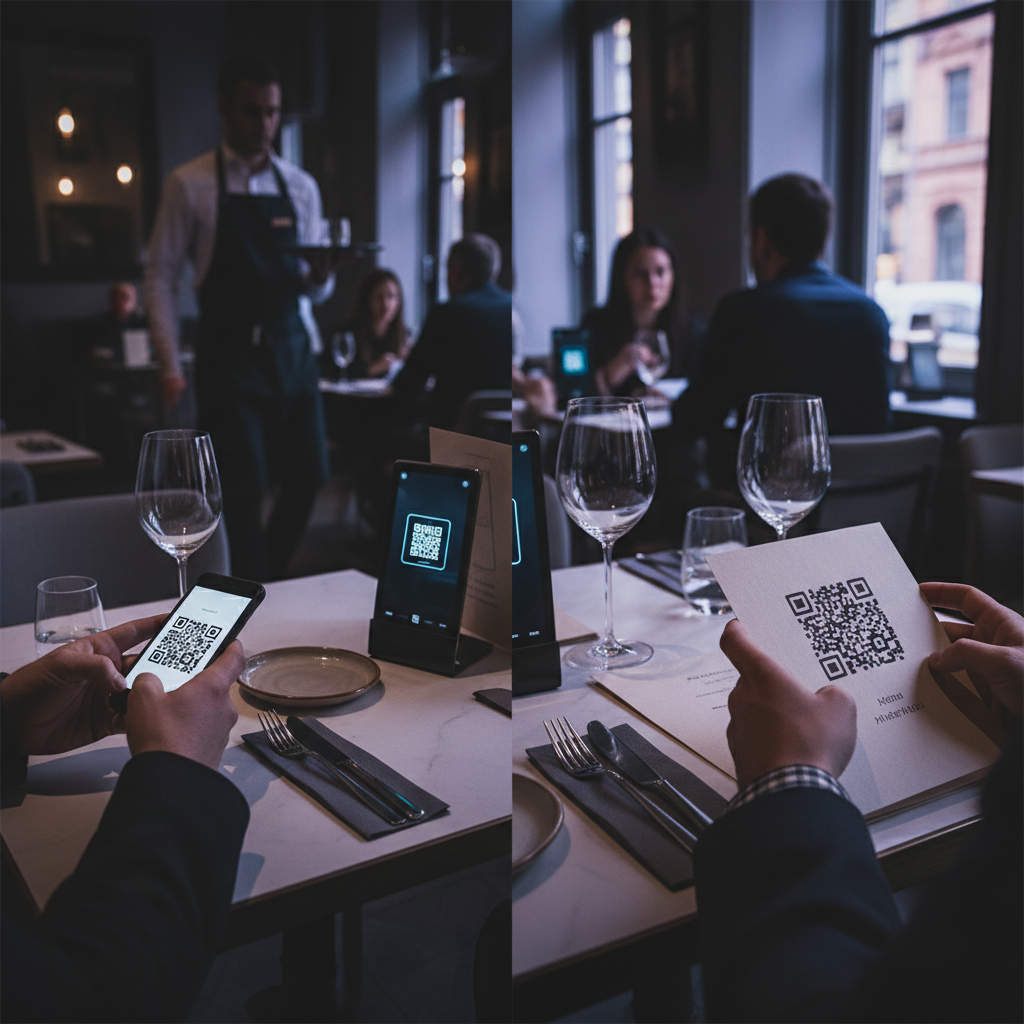
QR Menu Examples From Restaurants
The best restaurant QR menus do not just function — they feel intentional. They open quickly, read well on a phone, and reflect the restaurant brand and service style. Looking at strong QR menu examples helps operators avoid common mistakes and design a better digital menu experience.
Build your digital or QR menu in minutes
Try our Free AI Menu Builder for RestaurantsExample 1: The Simple One-Page Cafe Menu
Want a digital menu with QR code for your restaurant? Build your free digital menu — Create a QR menu in minutes — update it anytime, no printing required.
A neighborhood cafe might use a single mobile-friendly page with three sections: drinks, breakfast, and lunch. Category buttons at the top let customers jump quickly to what they want. This works because the menu is short, readable, and fast.
Example 2: The Multi-Section Casual Dining Menu
A full-service restaurant with starters, mains, desserts, cocktails, and wine benefits from a longer scrollable page with sticky navigation. This lets diners move between sections without feeling lost.
Example 3: The QR Menu With Live Specials
Restaurants with changing offers often use QR menus that include a dedicated specials block at the top. This is one of the strongest use cases for digital menus because it eliminates the need for inserts or verbal-only specials.
What Good QR Menus Share
- Readable text on mobile
- Clear category hierarchy
- Fast loading speed
- Current prices and live availability
- Brand-consistent colors and typography
The best examples are not necessarily the most complex. They are the ones that reduce friction and help customers order with confidence.
Why QR Menus Have Become Essential for Modern Restaurants
The adoption of QR code menus accelerated dramatically during the pandemic, but their advantages have kept them mainstream well beyond that period. Restaurants that switched to QR menus discovered benefits that go far beyond hygiene: instant menu updates, reduced printing costs, richer customer data, and a more streamlined table experience.
For small and independent restaurants especially, QR menus level the playing field. A small bistro can now offer the same polished digital experience as a large chain — complete with high-resolution food photography, allergen information, real-time specials, and even integrated ordering — without the overhead of a dedicated tech team.
How QR Menus Connect to Customer Loyalty on Loop.fans
One of the most underutilized opportunities in QR menu strategy is the connection to loyalty programs. When a guest scans your QR menu, you have a moment of direct digital engagement. Loop.fans enables restaurants to embed loyalty sign-up flows directly into that touchpoint — so a scan becomes not just a menu view, but the beginning of a customer relationship.
Guests can earn points for visits, for sharing photos of their meals, or for leaving reviews. This turns every table scan into a potential loyalty conversion. Over time, you build a database of engaged regulars rather than anonymous covers.
Step-by-Step: Getting Your QR Menu Right
- Choose a platform that allows instant updates: Your QR code should link to a live menu, not a static PDF. When you 86 an item or change a price, it should update in seconds.
- Design for mobile first: Most guests will view your menu on a smartphone. Large tap targets, readable fonts, and fast load times matter more than desktop aesthetics.
- Include high-quality photos: Menus with food photography see higher average check sizes. Even simple, well-lit photos on a smartphone can make a significant difference.
- Add allergen and dietary labels: Guests with dietary restrictions appreciate clear labeling. This also reduces the load on your servers fielding ingredient questions.
- Test the scan from every table: QR codes can fail if printed too small, placed in low-light areas, or laminated with a glossy finish that creates glare. Test each placement before service.
Common QR Menu Mistakes to Avoid
Even restaurants with good intentions make avoidable mistakes with their QR menu rollouts. Here are the most common issues and how to fix them:
- Linking to a PDF: A PDF menu is not searchable, not responsive, and cannot be updated in real time. Always use a hosted digital menu platform.
- No fallback for guests without smartphones: Always have a few physical menus or a printed sheet available for guests who prefer or need them.
- Poor placement: A QR code that's too small, placed flat on the table under a candle, or behind a condiment holder will frustrate guests. Mount it at eye level or use a table tent stand.
- Forgetting to update the menu: The biggest advantage of a digital menu is real-time updates. If your QR menu still shows a seasonal item from three months ago, you've lost the benefit.
- Not tracking scan data: Most QR menu platforms provide analytics on scan rates by table, time of day, and popular items. Use this data to optimize your menu engineering and staffing.
QR Menus and the Future of Table Service
QR menus are increasingly becoming the first layer of a broader digital table experience. Forward-thinking restaurants are integrating them with order-at-table systems, payment solutions, and loyalty programs to create a fully connected dining journey. A guest can scan, browse, order, pay, earn loyalty points, and leave a review — all from their phone, without a server needing to handle paper, terminals, or receipts.
This doesn't replace hospitality; it enhances it. When servers are freed from transactional tasks like handing out menus and processing payments, they can focus on the human elements that create memorable experiences: recommendations, personalization, and genuine connection.
Ready to build your digital menu?
Try our Free AI Menu Builder for RestaurantsFrequently Asked Questions About QR Menus
Do QR menus work for every type of restaurant?
QR menus work well for most dining formats, including casual dining,
Create your menu now — free, no design skills needed
Try our Free AI Menu Builder for RestaurantsAre QR menus free to use?
Many QR menu platforms offer free tiers with basic features. Paid plans typically unlock analytics, custom branding, ordering integration, and loyalty features. For most small restaurants, a free or low-cost plan covers the essentials.
Can I still use printed menus alongside QR codes?
Absolutely. Most restaurants use QR codes as the primary option while keeping a small number of printed menus for guests who prefer them. A hybrid approach ensures no guest is left without a good experience.
Building a Stronger Restaurant Business Through Better Systems
Running a restaurant is one of the most operationally demanding businesses in any industry. Margins are thin, staff turnover is high, and guest expectations continue to rise. The restaurants that thrive long-term tend to share a common trait: they invest in systems that make the guest experience consistently excellent while reducing the operational burden on their teams.
Whether that means a better menu management process, a smarter reservation system, a loyalty program that turns one-time visitors into regulars, or a digital presence that converts browsers into bookings — every improvement to your systems compounds over time. Small wins stack up into meaningful competitive advantages.
The Role of Digital Tools in Modern Restaurant Operations
The restaurant technology landscape has expanded dramatically. Tools that were once only available to large chains — digital menu management, loyalty programs, online ordering, automated marketing — are now accessible and affordable for independent operators. The challenge is knowing which tools actually move the needle and which ones add complexity without delivering value.
The most impactful digital investments for most restaurants fall into a few categories:
- Guest-facing tools: Your website, online ordering, reservation system, and digital menu are what guests interact with before and during their visit. These directly affect conversion and experience.
- Marketing and retention tools: Email marketing, loyalty programs, and social media presence are how you stay connected with guests between visits and bring them back.
- Operational tools: POS systems, inventory management, and scheduling software reduce friction and error in day-to-day operations.
- Analytics: Understanding what's working — which menu items, which promotions, which channels — is essential for making good decisions with limited resources.
How Loop.fans Fits Into the Restaurant Ecosystem
Loop.fans is built for restaurants that want to go beyond transactional loyalty. Traditional stamp cards and basic points programs reward spend only. Loop.fans enables you to reward the full range of valuable guest behaviors: visits, referrals, user-generated content, reviews, and social sharing.
The platform is designed to be lightweight for guests (no app download required) and powerful for operators. You can set up your program, define what earns points, and configure rewards in minutes. The data you collect — who your most engaged guests are, what brings them back, what they share — becomes a valuable asset for making smarter marketing decisions.
What Guests Actually Want from Restaurant Technology
Guest research consistently shows that technology is welcome when it makes their experience easier or better — and unwelcome when it adds friction or feels impersonal. The highest-rated digital touchpoints in restaurants are:
- Online reservations and waitlist tools that reduce uncertainty
- Digital menus that are easy to navigate and include photos
- Mobile payment options that speed up the end-of-meal experience
- Loyalty programs that recognize them and offer rewards they actually want
The lowest-rated are often the reverse: clunky interfaces, confusing loyalty programs with unreachable rewards, and technology that replaces human interaction without delivering a better experience in its place.
Practical Next Steps for Restaurant Operators
If you're looking to strengthen your restaurant's digital foundation, a practical starting point is to audit your current guest touchpoints: How easy is it for someone to find you online? How simple is the reservation process? Does your loyalty program actually drive repeat visits? Is your menu easy to read on a phone?
Identify the biggest gap and address it first. Trying to overhaul everything simultaneously rarely works — you end up with half-implemented systems and a team that's overwhelmed. One well-executed improvement, measured and refined, creates momentum for the next.
Frequently Asked Questions
What's the most impactful technology investment for a small restaurant?
For most small restaurants, the combination of a clean, mobile-optimized website with integrated online ordering or reservations delivers the fastest ROI. These tools directly increase revenue and reduce the operational friction of managing bookings and orders manually.
How do I choose the right loyalty program for my restaurant?
Start by identifying what behavior you most want to encourage — repeat visits, referrals, social sharing — and find a platform that makes those things easy to reward. Ease of enrollment for guests and ease of management for your team should both be high on your criteria list.
Is it worth investing in digital tools for a restaurant that already has strong word-of-mouth?
Strong word-of-mouth is an asset — and digital tools amplify it. A loyalty program gives your advocates a reason to refer friends, a digital menu gives them something easy to share, and a good website converts the referrals they send into actual bookings.
Implementing Qr Menu Examples From Restaurants for Maximum Impact
Successfully adding qr menu examples from restaurants requires a strategic approach that aligns with your overall business goals. Start by auditing your current customer journey to identify the best integration points. For restaurants, this might mean placing QR codes prominently on tables or creating a seamless online reservation flow directly from your website. For events and festivals, focus on mobile-first experiences that encourage real-time participation.
Key best practices include ensuring mobile responsiveness, integrating with your existing loyalty or CRM systems, and providing clear calls-to-action. Test different designs and messaging with a small audience before full rollout. Track metrics such as engagement rate, conversion to sign-ups, repeat visits, and customer feedback to measure success.
Real-World Examples and Case Studies
Many successful brands have leveraged similar strategies to boost engagement and retention. Consider how major sports teams use fan engagement platforms to maintain year-round connection through loyalty programs, gamified apps, and personalized offers. Restaurants using AI-powered QR menus have seen significant increases in data collection and repeat business by offering personalized recommendations based on past orders.
Festivals that implemented volunteer reward systems and post-event communities report higher attendee satisfaction and return rates. Tourism operators using destination loyalty programs see improved repeat visitation by rewarding cultural experiences and local business partnerships. These examples demonstrate that thoughtful implementation of loyalty, engagement, and digital tools delivers measurable ROI.
Choosing the Right Tools and Platforms
When selecting tools for qr menu examples from restaurants, prioritize platforms that offer easy integration, robust analytics, and scalability. Look for solutions with strong mobile support, customizable templates, and seamless connections to your website or POS system. Free and freemium options can be great starting points for small businesses, while enterprise features like advanced segmentation and automation suit larger operations.
- Integration capabilities: Ensure compatibility with your current tech stack.
- Analytics and insights: Access to dashboards that show real performance data.
- Customer support: Responsive help when you need to troubleshoot or optimize.
- Cost-effectiveness: Balance features with your budget — many tools offer generous free tiers.
Compare options like specialized QR menu generators, website builders with booking widgets, or comprehensive customer engagement platforms to find the best fit.
Future Trends in Customer Engagement and Loyalty
The landscape is evolving rapidly with AI personalization, gamification, UGC integration, and data-driven experiences becoming standard. Expect more emphasis on purpose-driven loyalty that aligns with customer values, seamless omnichannel experiences, and privacy-first data collection. Brands that stay ahead by adopting these trends will build stronger communities and more resilient revenue streams.
Whether you're a restaurant owner looking to modernize your menu and reservations, a festival organizer building year-round fan connection, or a hospitality group implementing coalition loyalty, focusing on genuine value and exceptional experiences will differentiate you in a competitive market.
Getting the most out of qr menu examples from restaurants: advanced tips and next steps
Use data to refine continuously
Track which menu items generate the most revenue per square foot of prep space, not just which sell the most units. High-margin, low-effort items deserve prominent placement; low-margin, high-complexity items should be reviewed regularly.
Connect menu strategy to loyalty
Your best-selling items are your loyalty program's best promotional tools. Offering a free version of your most popular dish as a reward drives redemptions, visibility, and word-of-mouth far more effectively than a generic discount.
Test incrementally, not all at once
Menu changes are experiments. Change one section at a time, give it 4–6 weeks, and measure the impact on total covers, spend per head, and reorder rate before making the next change.
Optimize for operational rhythm
The best menus are designed with kitchen flow in mind. Items that share prep components, cooking methods, or timing reduce service friction and improve consistency — especially during peak hours.
Ready to get started?
Launch your free digital loyalty card — No app download required for customers. Set up in 10 minutes.