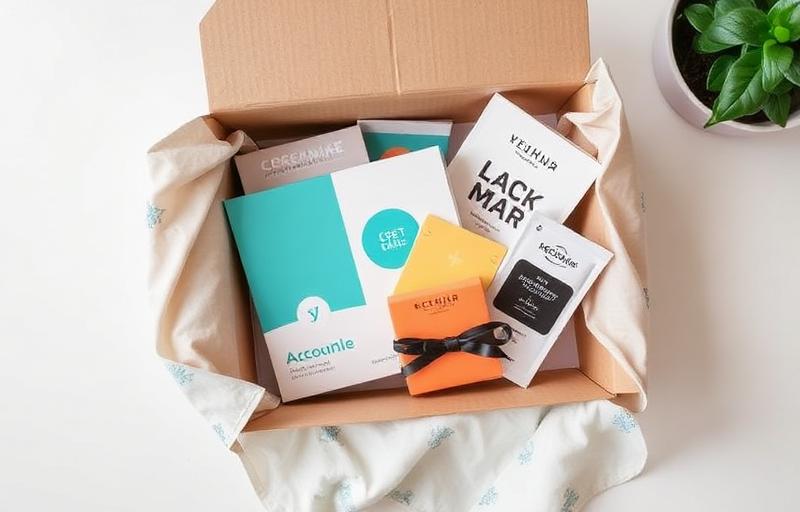
The Unboxing Economy: How Packaging Drives Customer Loyalty
The moment a customer opens your package is one of the most emotionally charged moments in their entire relationship with your brand. It's the first tangible encounter after the decision to buy — the instant where expectation meets reality. For most brands, it's also one of the most underdeveloped opportunities to create loyalty, generate UGC, and drive word-of-mouth. The unboxing economy is here, and the brands winning it are turning packaging into a marketing channel that keeps delivering value long after the box is opened.
Build a loyalty program your customers will actually use
See Loop.fans Loyalty & RewardsWhat Is the Unboxing Economy?
Want to calculate the ROI of a loyalty program? Try our free loyalty ROI calculator — See the revenue impact in minutes.
The unboxing economy refers to the cultural phenomenon of customers filming, photographing, and sharing their product unboxing experiences — and the commercial opportunity this creates for brands. YouTube alone has billions of unboxing video views. On TikTok, #unboxing content generates hundreds of millions of engagements daily. Instagram Stories, Pinterest hauls, and Twitter threads all contribute to a vast ecosystem of customer-generated content built around the moment of receiving a product.
For brands, this represents something remarkable: customers are voluntarily doing marketing work — creating authentic, high-reach content at the exact moment of maximum emotional engagement — and sharing it with their networks. The brands that design their packaging with this moment in mind turn every delivery into a potential marketing event.
The Business Case for Unboxing Experience Design
Premium unboxing experiences aren't just about aesthetics. They deliver measurable commercial outcomes:
- Higher UGC volume: well-designed unboxing experiences generate 3–5× more organic social sharing than plain packaging (Dotcom Distribution)
- Increased repeat purchase intent: 40% of consumers say they would purchase from a brand again based on premium packaging (Ipsos)
- Word-of-mouth amplification: unboxing videos and posts reach audiences who haven't encountered your brand yet, functioning as organic acquisition
- Brand perception uplift: premium packaging signals product quality before the product is even touched — it primes the customer for a positive product experience
- Social sharing likelihood: 55% of consumers who receive exciting packaging say they're likely to share it on social media
Designing an Unboxing Experience Worth Sharing
The Visual Moment
The first thing a customer sees when they open the box sets the emotional tone for everything that follows. Design this moment deliberately. Options range from branded tissue paper and ribbon reveals to custom box interiors, color-coordinated fills, and product presentations that feel like gift-giving.
The test: if you photographed the moment of first opening with a smartphone, would the result be share-worthy? If not, redesign it until it would be. Think about what the image would look like on Instagram — the composition, the color palette, the element of surprise or delight.
The Layered Reveal
The most engaging unboxing experiences have multiple layers — the outer box, then a tissue paper layer, then a personalized card, then the product presentation. Each layer maintains excitement and creates multiple potential photo moments. Brands like Glossier, Allbirds, and Warby Parker have built enormous organic UGC libraries partly by designing multi-layer unboxing experiences that naturally create content.
The Insert Card — Your Most Underused Marketing Asset
The insert card in your package is a direct communication to a customer at their moment of maximum brand openness. Most brands waste it with generic "thank you for your order" copy. What works better:
- A personal welcome from the founder or team (real or founder-voiced)
- A QR code linking to exclusive content, a welcome video, or a loyalty program enrollment
- A specific invitation to join the community: "Share your unboxing on Instagram and tag us for 100 loyalty points"
- A referral offer: "Love it? Share this code with a friend and you both get 15% off your next order"
- A product tip that improves the first experience and signals that you understand how they'll use it
Sensory Touches That Create Memory
Branded scents (tissue paper with a subtle brand fragrance), unique textures (embossed packaging, velvet pouches), and unexpected sounds (a distinctive seal-breaking sound) all engage senses beyond sight and create stronger emotional memories. These details are often what customers remember and mention in their reviews — "it even smells incredible when you open it" — and they don't require luxury price points to execute.
Connecting Unboxing to Your Loyalty and UGC Program
The unboxing moment is perfectly timed for loyalty program enrollment and UGC collection. Customers are happy, engaged, and holding their phone — make it easy to act on that.
In-Package Loyalty Enrollment
Include a QR code that links directly to loyalty program enrollment, with a clear incentive: "Scan to join our rewards program and earn 200 welcome points." First-time buyers who enroll in the loyalty program at this moment have significantly higher repeat purchase rates than those who don't — because they immediately have a reason to come back. See the full loyalty program strategy in the ultimate guide to loyalty programs.
UGC Collection at the Unboxing Moment
Your insert card should make UGC creation feel natural and rewarding. "Take a photo of your unboxing and tag us @[brand] — we feature our favorite customer photos every week, and you'll earn 50 loyalty points just for sharing." This turns a naturally occurring customer behavior into a structured, rewarded program action that generates content for your marketing channels.
The Unboxing Challenge
Run periodic "unboxing challenges" where customers who share their unboxing content within a specific window earn bonus loyalty points or are entered into a prize draw. Time these around new product launches, seasonal campaigns, or brand milestones. The combination of urgency, social sharing, and meaningful reward generates significant UGC volume and social reach in a short window.
Free loyalty program — no app download needed for customers
See Loop.fans Loyalty & RewardsThe ROI of Unboxing Experience Investment
Premium packaging costs more — but the right framing is ROI, not cost. Consider:
- What is the organic social reach value of unboxing content your customers create? (Estimate the equivalent paid social cost)
- What is the repeat purchase rate lift from customers who had a memorable unboxing experience vs. those who didn't?
- What is the referral value of word-of-mouth generated by customers sharing their unboxing experience with their network?
Brands that do this calculation seriously typically find that the premium packaging investment delivers 3–8× ROI through UGC, referral, and retention when measured correctly. The mistake is calculating packaging cost as a pure cost-of-goods expense rather than as a marketing channel investment.
Getting Started With LoopFans
LoopFans provides the loyalty and UGC infrastructure to connect your unboxing experience to a structured rewards program — making it easy to reward customers for sharing their unboxing, track referrals, and build a content library from customer-created unboxing content. Explore LoopFans.
Understanding The Unboxing Economy: How Packaging Drives Customer Loyalty in context
The Unboxing Economy: How Packaging Drives Customer Loyalty is one of those topics that looks simple on the surface but rewards deeper exploration. For creators and brands operating on Loop.fans, the context matters as much as the concept. Knowing what unboxing economy packaging loyalty means is just the entry point — the real value comes from understanding when it applies, how it interacts with other tactics, and what a high-quality execution actually looks like versus a low-effort attempt that delivers minimal return.
Audiences have become skilled at recognizing generic content. When a page genuinely unpacks a topic with specificity and actionable depth, it builds trust in a way that shallow summaries simply cannot. That trust compounds over time: readers bookmark, return, share, and link. For unboxing economy packaging loyalty specifically, the depth of coverage directly affects how useful the page is for someone actually trying to implement or evaluate the concept in a real context.
Why unboxing economy packaging loyalty matters for audience-driven growth
Growth on creator platforms is rarely linear. The most effective strategies tend to build participation systems — environments where audiences have reasons to return, contribute, and deepen their connection to a creator or brand. The Unboxing Economy: How Packaging Drives Customer Loyalty fits into this framework by addressing one specific pressure point in that system. Whether it improves discovery, retention, monetization, or community engagement depends on how it is applied, but the underlying principle is consistent: sustainable growth comes from compounding audience behavior, not one-off spikes.
When unboxing economy packaging loyalty is treated as an isolated tactic, results tend to be modest and hard to repeat. When it is integrated into a broader strategy — one that connects content, community, and conversion — the outcomes tend to be meaningfully better. The teams that do this well are usually the ones that understand not just what the tactic does, but how it fits into the larger system they are building.
Common implementation mistakes and how to avoid them
The most frequent mistake with unboxing economy packaging loyalty is treating it as a one-time effort rather than an ongoing practice. A single campaign, post, or feature rollout rarely moves the needle significantly on its own. The compounding effect that makes these strategies valuable comes from consistency — repeated execution, measurement, refinement, and integration with the rest of the creator's or brand's presence on the platform.
A second common mistake is optimizing for the wrong metric. Vanity numbers — raw impressions, follower counts, surface-level engagement — can look good while the underlying business metrics remain flat. For unboxing economy packaging loyalty, the metrics that matter are usually tied to retention, repeat engagement, conversion, and audience lifetime value. Setting those as the primary success criteria from the start forces clearer thinking about what execution actually needs to look like.
- Mistake 1: Running a single activation and moving on before results can compound.
- Mistake 2: Measuring success by reach or impressions instead of retention and conversion.
- Mistake 3: Treating unboxing economy packaging loyalty in isolation instead of integrating it with adjacent content and community tactics.
- Mistake 4: Skipping the documentation step — what worked, what did not, and why.
Practical execution framework for The Unboxing Economy: How Packaging Drives Customer Loyalty
Effective execution of unboxing economy packaging loyalty usually follows a recognizable pattern regardless of the specific context. The first step is definition: what specific outcome does this tactic need to drive, and what does success look like in measurable terms? The second step is baseline: what is the current state, and what would a meaningful improvement look like within a realistic timeframe? The third step is activation: what is the minimum viable version of this tactic that can be tested quickly and inexpensively?
From there, the pattern is iteration. Run the activation, measure against the defined success criteria, identify what worked and what did not, and refine before the next cycle. Over time, this process builds an institutional understanding of how unboxing economy packaging loyalty performs in a specific context — which is far more valuable than any generic best-practice framework. The goal is not to follow a playbook; it is to develop one that is specific to the audience, platform, and creator or brand in question.
Documentation is the step most teams skip, and it is also the step that separates teams that improve over time from those that repeat the same mistakes. After each activation, capture the key decisions, the results, and the one or two things that would be done differently next time. This does not need to be elaborate — a short internal note is enough. The habit of capturing it is what matters.
See also: Customer Engagement Strategies That Increase Retention
Start your loyalty program today — free
Also on Loop.fans: Build your brand's digital hub with our AI website builder for consumer brands — CRM, loyalty, and UGC tools included.
See Loop.fans Loyalty & RewardsImplementing Unboxing Economy Packaging Loyalty for Maximum Impact
Successfully adding unboxing economy packaging loyalty requires a strategic approach that aligns with your overall business goals. Start by auditing your current customer journey to identify the best integration points. For restaurants, this might mean placing QR codes prominently on tables or creating a seamless online reservation flow directly from your website. For events and festivals, focus on mobile-first experiences that encourage real-time participation.
Key best practices include ensuring mobile responsiveness, integrating with your existing loyalty or CRM systems, and providing clear calls-to-action. Test different designs and messaging with a small audience before full rollout. Track metrics such as engagement rate, conversion to sign-ups, repeat visits, and customer feedback to measure success.
Real-World Examples and Case Studies
Many successful brands have leveraged similar strategies to boost engagement and retention. Consider how major sports teams use fan engagement platforms to maintain year-round connection through loyalty programs, gamified apps, and personalized offers. Restaurants using AI-powered QR menus have seen significant increases in data collection and repeat business by offering personalized recommendations based on past orders.
Festivals that implemented volunteer reward systems and post-event communities report higher attendee satisfaction and return rates. Tourism operators using destination loyalty programs see improved repeat visitation by rewarding cultural experiences and local business partnerships. These examples demonstrate that thoughtful implementation of loyalty, engagement, and digital tools delivers measurable ROI.
Choosing the Right Tools and Platforms
When selecting tools for unboxing economy packaging loyalty, prioritize platforms that offer easy integration, robust analytics, and scalability. Look for solutions with strong mobile support, customizable templates, and seamless connections to your website or POS system. Free and freemium options can be great starting points for small businesses, while enterprise features like advanced segmentation and automation suit larger operations.
- Integration capabilities: Ensure compatibility with your current tech stack.
- Analytics and insights: Access to dashboards that show real performance data.
- Customer support: Responsive help when you need to troubleshoot or optimize.
- Cost-effectiveness: Balance features with your budget — many tools offer generous free tiers.
Compare options like specialized QR menu generators, website builders with booking widgets, or comprehensive customer engagement platforms to find the best fit.
Future Trends in Customer Engagement and Loyalty
The landscape is evolving rapidly with AI personalization, gamification, UGC integration, and data-driven experiences becoming standard. Expect more emphasis on purpose-driven loyalty that aligns with customer values, seamless omnichannel experiences, and privacy-first data collection. Brands that stay ahead by adopting these trends will build stronger communities and more resilient revenue streams.
Whether you're a restaurant owner looking to modernize your menu and reservations, a festival organizer building year-round fan connection, or a hospitality group implementing coalition loyalty, focusing on genuine value and exceptional experiences will differentiate you in a competitive market.