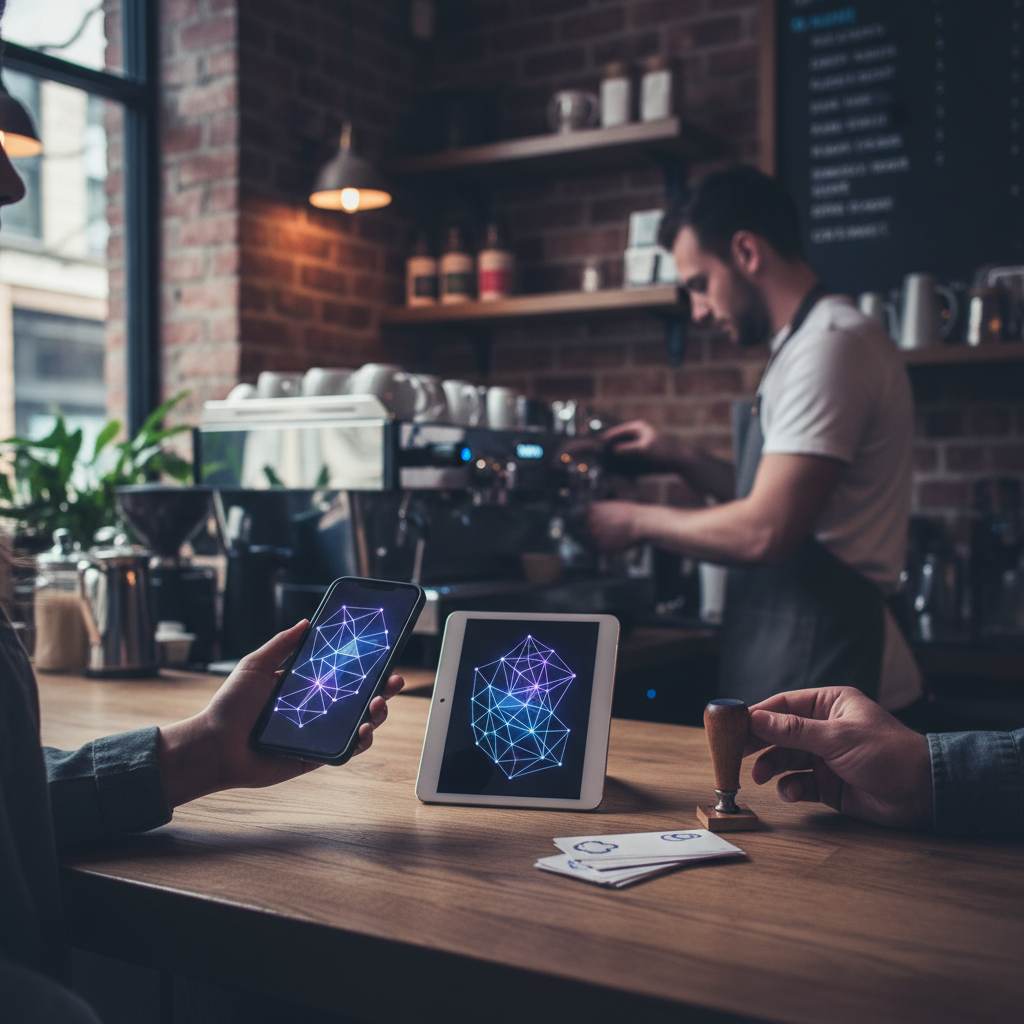
Loyalty Card for Small Business: Digital vs Physical and How to Set One Up Free
The loyalty card is one of the oldest and most reliable tools in the small business toolkit. Simple premise: visit enough times, earn a reward. Yet the format still works — not just because the economics make sense, but because of something deeper about how people experience progress and belonging.
This guide covers the psychology behind loyalty cards, the honest comparison between physical and digital formats, and a practical walkthrough of how to set up a digital loyalty card for your small business without spending anything.
Why Loyalty Cards Still Work for Small Businesses
Want to replace your paper punch cards with a digital version? Get your free digital punch card — Customers earn stamps on their phone. No app download required.
Before we get into formats and platforms, it's worth understanding why loyalty cards work at all. The answer isn't just "free coffee after ten visits." It's rooted in behavioral psychology.
The Endowment Effect
Once a customer has a stamp on their card, that card has value. They've made progress. The endowment effect — our tendency to value things we already possess — means that a customer with 3 out of 10 stamps is more likely to keep coming back than a customer who has no card at all. The partial progress matters.
Goal Gradient Effect
People accelerate their effort as they get closer to a goal. Researchers have documented that coffee shop customers visit more frequently as they approach a free drink reward. A loyalty card doesn't just reward past visits — it actively shapes future behavior by making the next visit feel purposeful.
Tangible Progress
Unlike abstract point balances, a stamp card shows progress visually. You can see exactly how far you've come and how far you need to go. This visual representation of progress is more motivating than a number on a screen, which is why even digital versions of stamp cards maintain the stamp-and-grid visual metaphor.
Identity and Belonging
Carrying a loyalty card from a local coffee shop or bakery is a small signal of identity. "I'm a regular here." For independent small businesses competing against chains, this sense of belonging is a genuine differentiator. Chains can replicate the economics; they can't replicate the feeling of being a known regular.
Physical vs Digital Loyalty Cards — Pros, Cons, and When Each Makes Sense
Both formats work. The question is which fits your operation, your customer base, and your goals.
Physical Loyalty Cards
Pros:
- Zero friction at enrollment — hand the card over, done
- No technology required from customers
- Tangible, carry-in-wallet presence that serves as a daily reminder
- Works for any age demographic, including those less comfortable with apps
- Very low cost to produce ($30–$60 for 500 business-card-sized cards)
Cons:
- Cards get lost. When a customer loses their card, you lose the data and they lose their progress.
- No data capture. You learn nothing about who your regulars are unless you add a sign-up form.
- Easy to game — customers can stamp their own cards if your process isn't tight.
- No way to communicate with card holders (no email, no push notification).
- No insight into redemption rates or which rewards are driving behavior.
When physical works best: Older customer demographics, very low-tech environments, or situations where you want something to hand out immediately with zero setup. Physical cards are also a good bridge while you set up a digital system.
Digital Loyalty Cards
- Indestructible — no lost cards, no "I forgot it at home"
- Captures customer data (email, phone number, visit history)
- Enables communication — send a nudge when someone hasn't visited in 30 days
- Redemption tracking — know exactly when rewards are claimed
- Works with QR codes — no physical inventory to manage or reorder
- Better for tracking ROI — see what's working
- Requires enrollment (a small but real friction point)
- Customers need a phone and a data connection
- May feel less tangible for some customer segments
When digital works best: Most modern small businesses with a customer base under 60 will see better results from digital. The data capture alone makes it worth the slightly higher enrollment friction — you learn who your regulars are and can reach them directly.
Free Options for Going Digital (No App Download Required)
One of the biggest misconceptions about digital loyalty cards is that they require customers to download an app. This is no longer true. The best modern platforms let customers enroll via a browser link or QR code — no installation required.
Here's what to look for in a free or low-cost digital loyalty card platform:
- No app required for customers: Enrollment via link, QR code, or phone number only.
- Free tier with real functionality: Not just a 14-day trial. Actually free for ongoing use.
- Email capture: The platform should collect at minimum the customer's email or phone number at enrollment.
- Redemption tracking: You should be able to see when rewards are claimed, not just how many stamps are issued.
- Basic communications: The ability to reach members when they're close to a reward or haven't visited recently.
Loop.fans meets all of these criteria. It's free to start, requires no app download, captures email at enrollment, and provides a dashboard with visit history and redemption tracking.
For deeper context on how digital versions of classic punch cards work, see our breakdown of the modern punch card reward system — including how the format has evolved and what makes it effective.
How to Design a Loyalty Card That Actually Drives Repeat Visits
The mechanics of your loyalty card matter more than the format. A poorly designed digital program underperforms a well-designed physical one.
Set the Right Reward Threshold
The most common mistake is making the reward too hard to reach. If customers need 15 stamps for a free item, most will lose interest before they get there. The psychology works best when the reward feels achievable within a reasonable number of visits.
General guidelines by business type:
- Coffee shops: 8–10 visits for a free drink
- Fast casual restaurants: 8–12 visits for a free item or $5–$10 off
- Full service restaurants: 6–10 visits for a meaningful reward ($10–$20 off)
- Retail / boutique: Points-based with redemption at 200–500 points is often more appropriate than stamps
Set the Right Earn Rate
The earn rate determines how quickly customers feel progress. For coffee shops with $5 average tickets, 1 stamp per visit works because customers come frequently. For full-service restaurants with $40 average tickets, you might award 1 stamp per $10 spent to accommodate the higher spend per visit.
Make the Reward Meaningful
A free drink or free entrée is more motivating than a 10% discount. The reward should feel like a gift, not a coupon. The best rewards are items that have high perceived value but manageable cost for you (free drink upgrades, free desserts, free appetizers).
Consider a Welcome Bonus
Pre-loading 1 or 2 stamps at enrollment accelerates the endowment effect. Customers feel immediately invested. This is especially useful when you're converting customers from a physical card system or a competitor's program.
These principles also apply to your broader marketing ecosystem. If you're not already using email to communicate with loyalty members, review our guide to restaurant email marketing for integration tips.
Common Mistakes That Undermine Your Loyalty Card Program
Reward Too Far Away
We've covered this, but it bears repeating. If customers can't mentally picture themselves reaching the reward within 2–3 months of regular visits, they'll stop engaging. Audit your threshold against your actual visit frequency data before you launch.
No Reminder Touchpoints
Physical cards rely on the customer remembering they have the card. Digital programs can do much better — send a reminder when someone is 1–2 stamps away from a reward. These near-milestone nudges are highly effective and drive incremental visits that wouldn't have happened otherwise.
No Data Capture
If you're running a physical punch card with no sign-up form, you're generating loyalty behavior with no business intelligence. You don't know who your regulars are, you can't contact them, and you have no way to win them back if they stop coming. At minimum, add a simple sign-up form that captures an email address — even for physical card programs.
Forgetting to Promote It
A loyalty card that nobody knows about doesn't work. Train every staff member to mention it during checkout. Put the QR code on your receipt, your table cards, your menu, and your front window. Feature it in your onboarding materials when you're opening a new restaurant. Announce it to your existing following on social media.
Ignoring the Data
Digital loyalty platforms give you data you've never had before. Use it. Check who's enrolled, how often they're visiting, and when redemptions spike. If you're also tracking inventory, correlate your loyalty redemption days with your restaurant inventory management software to see how rewards affect product demand.
How to Set Up a Digital Loyalty Card with Loop.fans for Free
Here's the step-by-step to get live in under 15 minutes:
- Create your account at loop.fans — no credit card required.
- Choose your program type: Start with a stamp card if you want simplicity, or points-based if you have variable ticket sizes.
- Set your reward: Define what customers earn and what they redeem. Keep the threshold achievable.
- Generate your QR code: Loop.fans creates a QR code tied to your program. Print it or display it digitally — wherever customers will see it at the point of purchase.
- Train staff: Two sentences: "Scan this to join our rewards program. You'll get [reward] after [X visits]."
- Go live: Start collecting stamps. Check your dashboard weekly to see who's enrolling and redeeming.
No developer needed. No hardware to buy. No app for customers to install.
When a Loyalty Card Becomes a Participation Platform
For small businesses, a loyalty card is often the first and sometimes the only customer retention tool in place. It's accessible, inexpensive to implement, and easy for customers to understand. "Buy nine coffees, get the tenth free" is a proposition that needs no explanation. This simplicity is a genuine strength — but it's also a ceiling. A loyalty card can keep customers coming back, but it can't turn them into advocates, referrers, or content creators. The businesses that outgrow the simple loyalty card are the ones that recognise the difference between repeat buying and active participation.
A customer who returns every week because of a punch card is valuable. A customer who also brings a friend, posts a positive review, or shares their experience on social media is exponentially more valuable — and they cost the business almost nothing extra to retain. According to customer loyalty statistics, referred customers have higher retention rates and lifetime value than customers acquired through other channels. The participation model formalises this dynamic, creating systems where advocacy is recognised and rewarded rather than left to chance.
The evolution from loyalty card to participation platform doesn't require abandoning what's already working. A small business might keep its stamp card while adding a referral prompt, a review request, or a social sharing incentive. The participation flywheel begins with these small additions: one customer shares, their network sees it, new customers arrive through that organic channel, and some of those new customers become participants themselves. Over time, the compounding effect of participation delivers growth that no punch card alone can match. For small businesses evaluating whether to invest beyond a basic loyalty card, the participation economy framework provides a practical roadmap.
Getting the most out of loyalty card for small business: advanced tips and next steps
Audit your reward redemption rate quarterly
A healthy loyalty program has a redemption rate above 30%. If customers are earning but not redeeming, your reward threshold may be too high, your reward options unappealing, or your reminders insufficient. Low redemption often signals high churn risk.
Layer behavioral triggers on top of point accumulation
Points alone are table stakes. The programs that drive real retention add behavioral triggers: a welcome bonus for new members, a bonus for trying a new service category, a milestone reward at 6 months. Each trigger is a reason to return that wouldn't otherwise exist.
Measure program ROI at the cohort level
Don't measure loyalty success by total members. Measure visit frequency of members vs. non-members, average spend per visit, and 12-month retention rate by enrollment cohort. This tells you whether the program is actually changing behavior.
Use your loyalty data for inventory and staffing decisions
If your loyalty program data shows that 40% of your most loyal customers visit on Thursday evenings, that's a staffing and inventory signal, not just a marketing one. Operational decisions informed by loyalty data compound the program's value.
Ready to get started?
Create your free digital punch card — Free forever. Set up in 10 minutes.